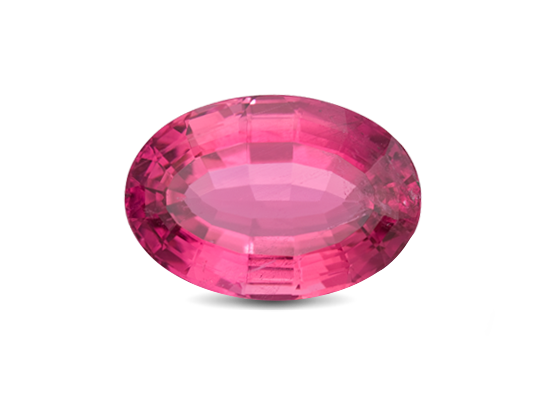
Pink tourmaline is a member of the tourmaline group (most commonly the elbaite species) prized for its rosy hues, strong pleochroism, good durability (Mohs ~7–7.5), and wide range of sizes and shapes—perfect for buyers seeking loose gemstones for custom jewelry or collections. Some stones are irradiated or heated to improve color (disclosure is standard best practice). Care is simple: warm soapy water only; avoid ultrasonic/steam and high heat. Tourmaline is also an October birthstone—a strong gift driver. Geology.comInternational Gem SocietyGIA+2GIA+2
What Is Pink Tourmaline?
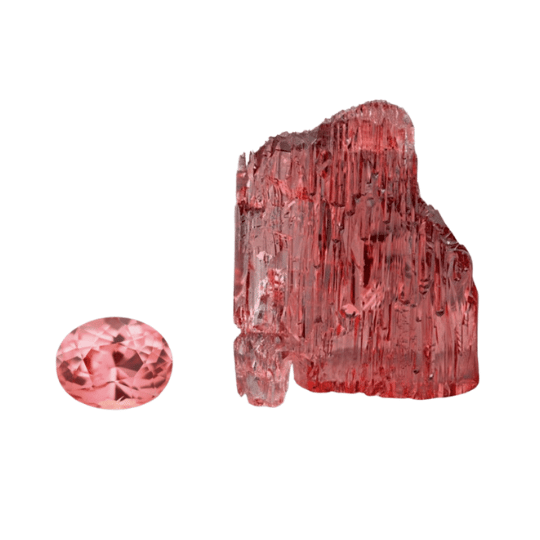
Pink tourmaline refers to pink-to-rosy varieties within the tourmaline group—a family of boron-silicate minerals that occur in more colors than almost any other gem species. In gem trade, most pink material is the elbaite species. Color ranges from delicate blush to vivid raspberry and hot fuchsia. Geology.comMindat
Pink tourmaline’s color is typically due to manganese; stones often show pleochroism (color shifts at different viewing angles), which cutters use to orient the gem for the richest face-up color. Tourmaline has no widely available lab-grown counterpart in the market; when you buy tourmaline (if it’s genuinely tourmaline), it’s natural—though treatments (see below) can intensify color. GIA
Key origins you’ll see in listings include Brazil, Mozambique, Nigeria, Madagascar, Afghanistan, and the U.S. (Maine/California). Origin can affect availability of certain shades and sizes but is not the only driver of price—color quality is. Geology ScienceGeology.com
Why Pink Tourmaline Is Popular (Especially in Loose Stones)
-
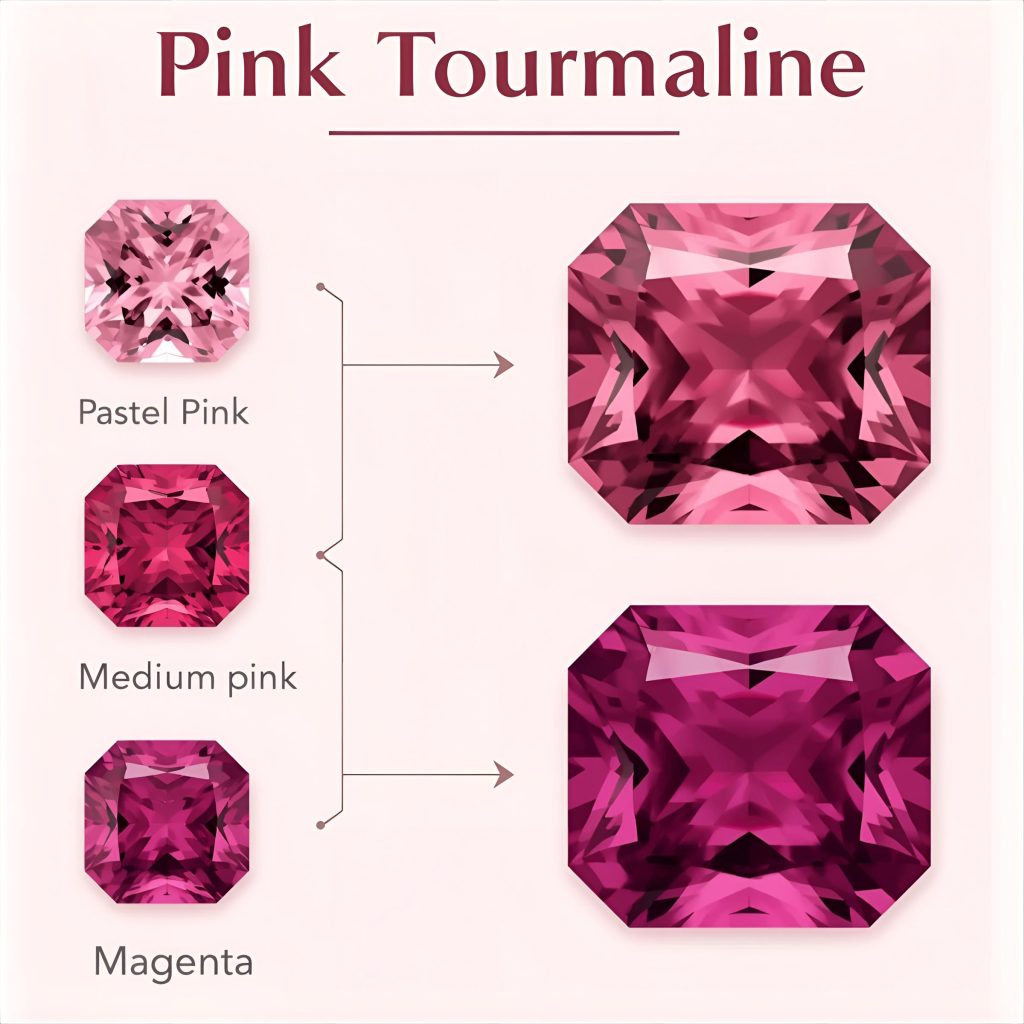
- Color range: from pastel ballet-pink to vivid magenta; many buyers hunt specific tones for custom pieces. Geology.com
-
- Durability: Mohs 7–7.5 with no cleavage, so it handles daily wear better than many other pink gems. International Gem Society
-
- Availability in sizes: from small calibrated melee up to larger statement stones.
-
- October birthstone: strong seasonal demand for gifts and custom orders. GIA
Quality Factors: How to Judge a Loose Pink Tourmaline
Color (Most Important)
For colored stones, color dominates value. Look at hue (pure pink vs. purplish/red), tone (light to dark), and saturation (intensity). Vivid, even color with minimal brown/gray is most prized. Pleochroism means face-up color can shift; rotate the stone under neutral light before buying. International Gem Society
Clarity
Tourmaline often shows needle-like or fluid inclusions. Clean eye-visible clarity boosts price, but attractive inclusions are tolerated in richly saturated stones. Avoid cracks that reach the surface at girdle/corner areas if you plan to set the gem. GIA
Cut & Shape
Because of pleochroism and elongated crystals, you’ll see ovals, pears, cushions, emerald cuts, and long rectangles. A well-executed cut maximizes color and brilliance without windowing (see-through center) or extinction (over-dark areas). For calibrated settings, confirm exact millimeter dimensions. International Gem Society
Carat & Dimensions
Price doesn’t scale linearly—above 3–5 carats, fine color premiums rise faster due to rarity. Always verify L×W×D mm because tourmaline’s depth varies; two stones with the same carat weight can face up differently. International Gem Society
Treatments, Synthetics & Look-Alikes
Common Treatments
-
- Irradiation (pink): Pale stones may be irradiated to intensify pink; color may fade with heat or prolonged bright light. GIA+1
-
- Low-temperature heating (greens/blues): Used to adjust color; typically stable; gems with abundant liquid inclusions can’t take heat. GIA
Disclosure matters. The trade uses AGTA-style treatment codes to keep language consistent; reputable sellers disclose any enhancements on invoices/listings. International Gem Society
Are There Lab-Grown Pink Tourmalines?
There is no widely available lab-grown tourmaline on the market; genuine tourmaline is natural (be mindful of imitations). GIA
Look-Alikes You’ll See
-
- Kunzite (spodumene): lighter pink/lavender; lower hardness (~6.5–7); can fade (“evening stone”).
-
- Morganite (beryl): peachy-pink; harder (7.5–8) but often very light.
-
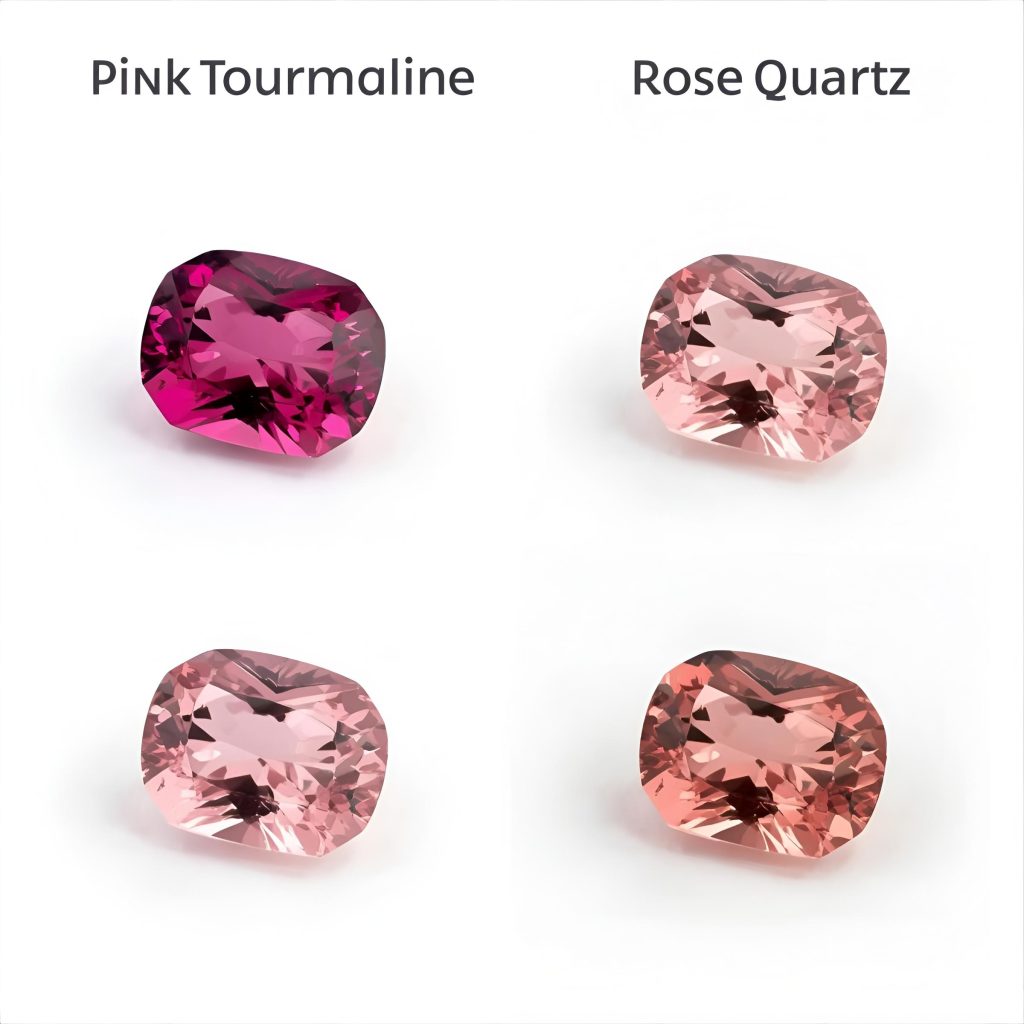
- Rose quartz: translucent, lower brilliance.
-
- Rhodolite garnet / spinel / sapphire: different chemistry/optics; typically higher RI and sometimes higher price in fine grades.
(These comparisons are for buyer awareness; lab testing confirms identity.)
Where Pink Tourmaline Comes From (and Why It Matters)
Brazil (Minas Gerais) has supplied classic material for decades; Mozambique and Nigeria produce abundant African goods; Madagascar and Afghanistan also yield attractive pinks. Origin can influence typical crystal sizes and color styles available to the trade, but face-up color and clarity still trump origin for most buyers. Geology ScienceGeology.com
Buying Guide: How to Choose a Loose Pink Tourmaline (Step-by-Step)
1) Define the Use Case (Setting or Collection)
If it’s for a ring, prioritize durability + proportions that face up large without excessive depth. For pendants/earrings, you can accept slightly deeper stones if color is exceptional.
2) Evaluate Color Under Neutral Light
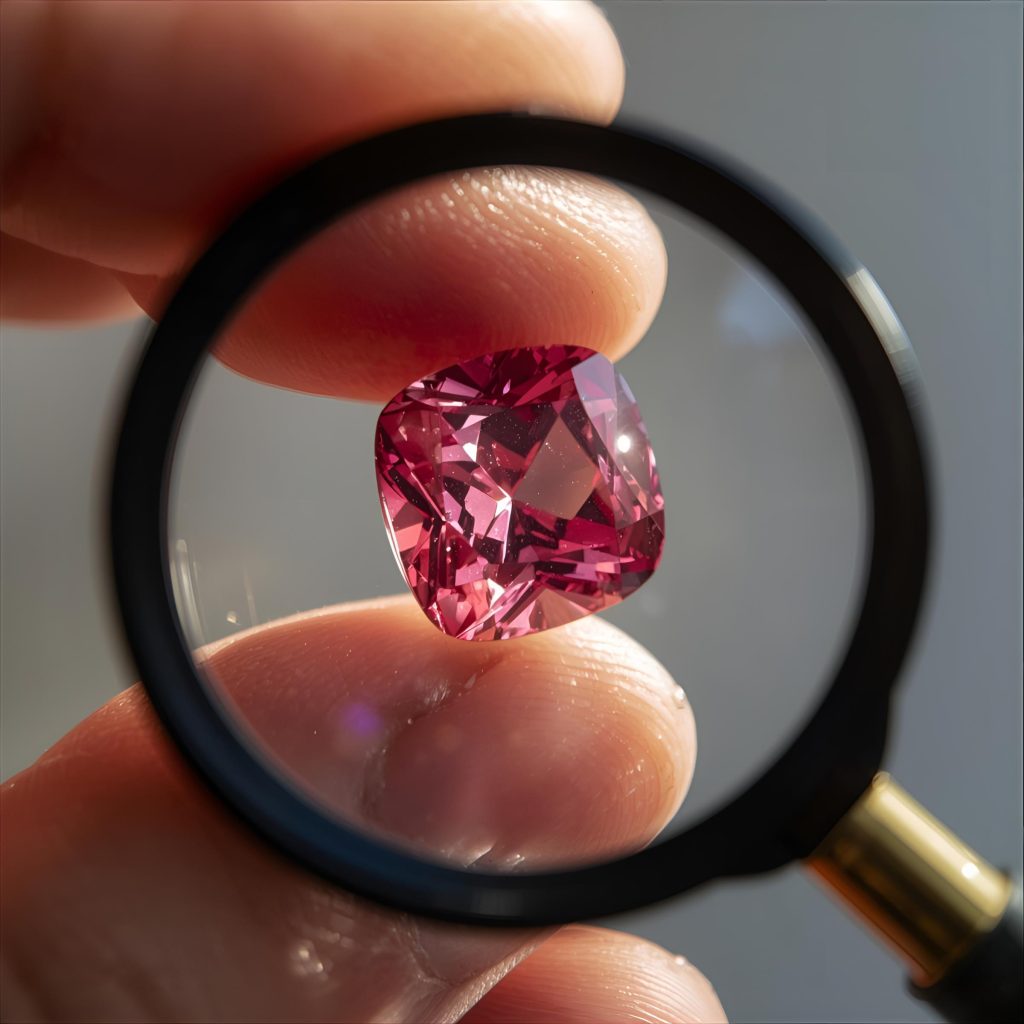
Aim for even saturation and a tone that isn’t too dark. Rotate the stone: if the long axis shows better color, an elongated cut can maximize that. International Gem Society
3) Check Clarity Where It Counts
Minor inclusions are acceptable; avoid feathers at corners and stress points if you plan to set prongs. GIA
4) Inspect the Cut
Watch for windowing (a washed-out center) and extinction (dead areas). A good cut should show bright return across the face.
5) Verify Dimensions (Not Just Carat)
Ask for mm measurements and depth % so the stone will fit your intended mounting and face up as expected. International Gem Society
6) Ask About Treatments & Disclosure
Request treatment disclosure in line with AGTA-style codes (e.g., irradiation). Reputable dealers put this on the listing and invoice. International Gem Society
7) Consider a Lab Memo for High-Value Stones
For expensive acquisitions, consider a memo/report from a recognized gem lab. (Note: Irradiation in tourmaline can be difficult or impossible to detect, so labs may state “no evidence observed” rather than a definitive call.) GIA
8) Pricing Pointers
-
- Prices climb with vivid saturation, even color, eye-clean clarity, and larger sizes (especially above 3–5 ct).
-
- Expect non-linear jumps for top colors/clean stones. (For detailed color-variety pricing across the tourmaline family, see the IGS buying/value overviews.) International Gem Society+1
Pink Tourmaline vs Other Pink Gemstones (Quick Comparison)
| Gemstone | Typical Look | Mohs Hardness | Notes |
|---|---|---|---|
| Pink Tourmaline | Blush to vivid magenta; pleochroic | ~7–7.5 | No common lab-grown; some stones irradiated; great in many shapes. International Gem SocietyGIA |
| Morganite (Beryl) | Light peach-pink | 7.5–8 | Often pale; large clean stones available. |
| Kunzite (Spodumene) | Pink-lavender | 6.5–7 | Can fade with light; needs careful setting. |
| Rose Quartz | Milky/translucent pink | 7 | Lower brilliance; often cabochon/beads. |
| Rhodolite Garnet | Purplish pink to raspberry | 6.5–7.5 | Strong brilliance; generally untreated. |
(Hardness figures consolidated from standard gem references; always verify with a trusted lab/vendor when in doubt.)
Care & Maintenance
-
- Clean: Warm, soapy water + soft brush. Rinse and pat dry. Avoid ultrasonic and steam cleaners. GIA
-
- Protect from heat/bright light if irradiated color is suspected; excessive heat can fade irradiation-induced color. GIA
-
- Store stones separately in soft pouches to avoid scratches.
Meaning, Symbolism & Gift Occasions
Many shoppers seek pink tourmaline for its associations with love, compassion, and calm (beliefs vary and aren’t scientific). More concretely, tourmaline is an October birthstone, which drives seasonal demand—perfect timing for giftable loose stones that clients set later. GIA
FAQs for Pink Tourmaline
1. Is pink tourmaline treated?
Answer: Most pink tourmaline gemstones are naturally colored, which makes them highly desirable for collectors and buyers. However, some stones may undergo irradiation or low-temperature heat treatment to enhance their pink hue. When buying loose pink tourmaline, always confirm with the seller about any treatments. Reputable dealers provide full disclosure following AGTA-style guidelines. Untreated stones usually command a higher price, especially if the color is vivid and eye-clean.
2. How should I clean pink tourmaline?
Answer: To clean your loose pink tourmaline, use warm soapy water and a soft brush. Rinse thoroughly and pat dry with a soft cloth. Avoid ultrasonic cleaners, steam, or high heat, especially if the stone has been irradiated, as this can fade the color. Proper cleaning not only maintains its sparkle but also preserves the gemstone’s longevity. Store each stone separately in a soft pouch to prevent scratches.
3. Is pink tourmaline rare?
Answer: Pink tourmaline is considered moderately rare, particularly in larger, high-quality sizes with vivid color and minimal inclusions. While small stones are relatively common, collector-grade faceted stones in sizes above 3–5 carats are scarce. Origin can affect rarity; for example, stones from Mozambique or Afghanistan often have exceptional color, making them highly sought after by gemstone enthusiasts and collectors.
4. Which month is pink tourmaline a birthstone for?
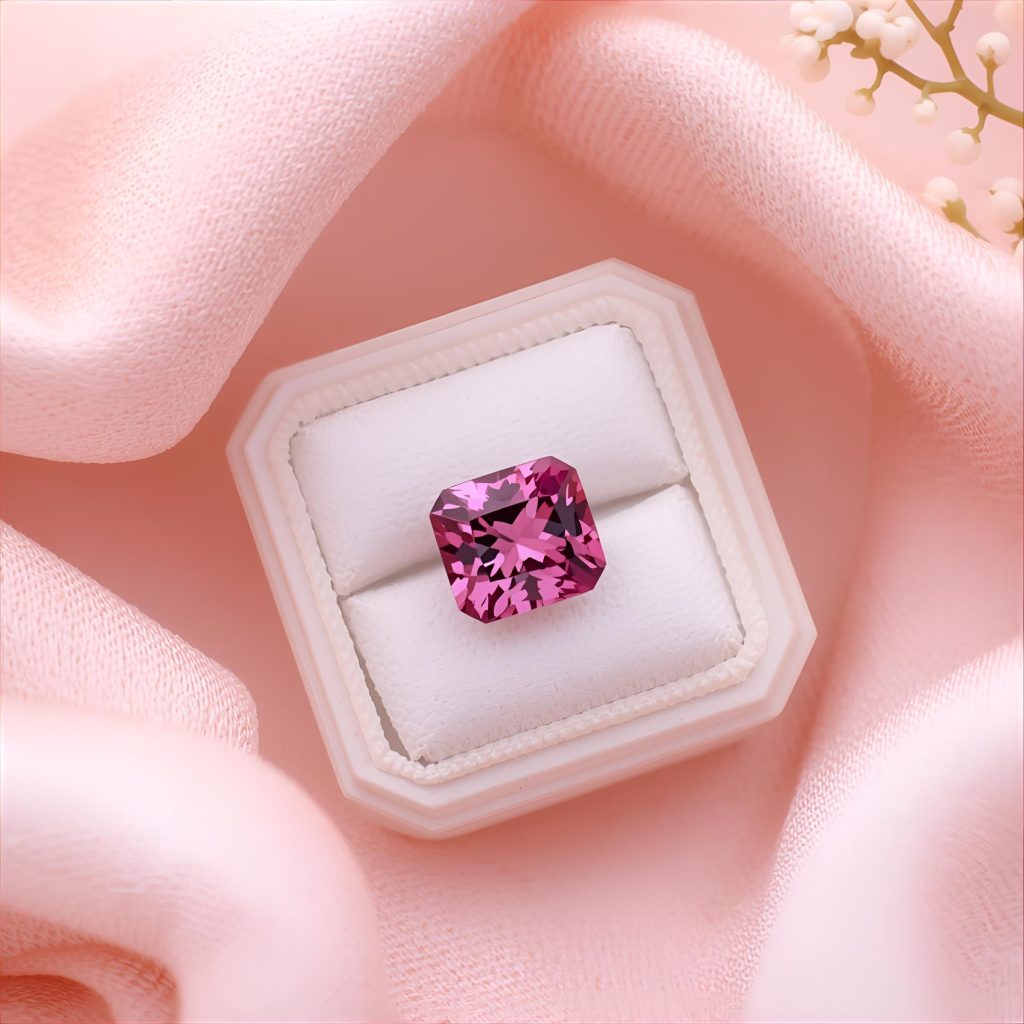
Answer: Pink tourmaline is one of the official birthstones for October, along with opal. It symbolizes love, compassion, and emotional healing, making it a popular choice for birthday gifts or personalized jewelry designs. Loose stones allow buyers to create custom rings, pendants, or collections. October birthdays often seek this gemstone due to its vibrant colors and metaphysical associations.
5. How to choose the best loose pink tourmaline stone?
Answer: When selecting a loose pink tourmaline, consider color, clarity, cut, and carat weight. Look for vivid, even color without brown or gray tones, minimal eye-visible inclusions, and a well-proportioned cut to maximize brilliance. Confirm the stone’s exact dimensions (L×W×D in mm) to ensure it fits your intended setting. Always ask the seller about treatments and request lab verification for larger or high-value stones to guarantee authenticity.
6. Can pink tourmaline fade over time?
Answer: Generally, natural pink tourmaline is stable under normal conditions. However, stones that have been irradiated may be sensitive to prolonged bright light or high heat, which can slightly alter their color. To preserve your gemstone, avoid direct sunlight for long periods and do not expose it to harsh cleaning methods. Proper storage in soft pouches or jewelry boxes also ensures color longevity and maintains brilliance.