Introduction to Rare and Unique Gemstones
What Makes a Gemstone Rare?
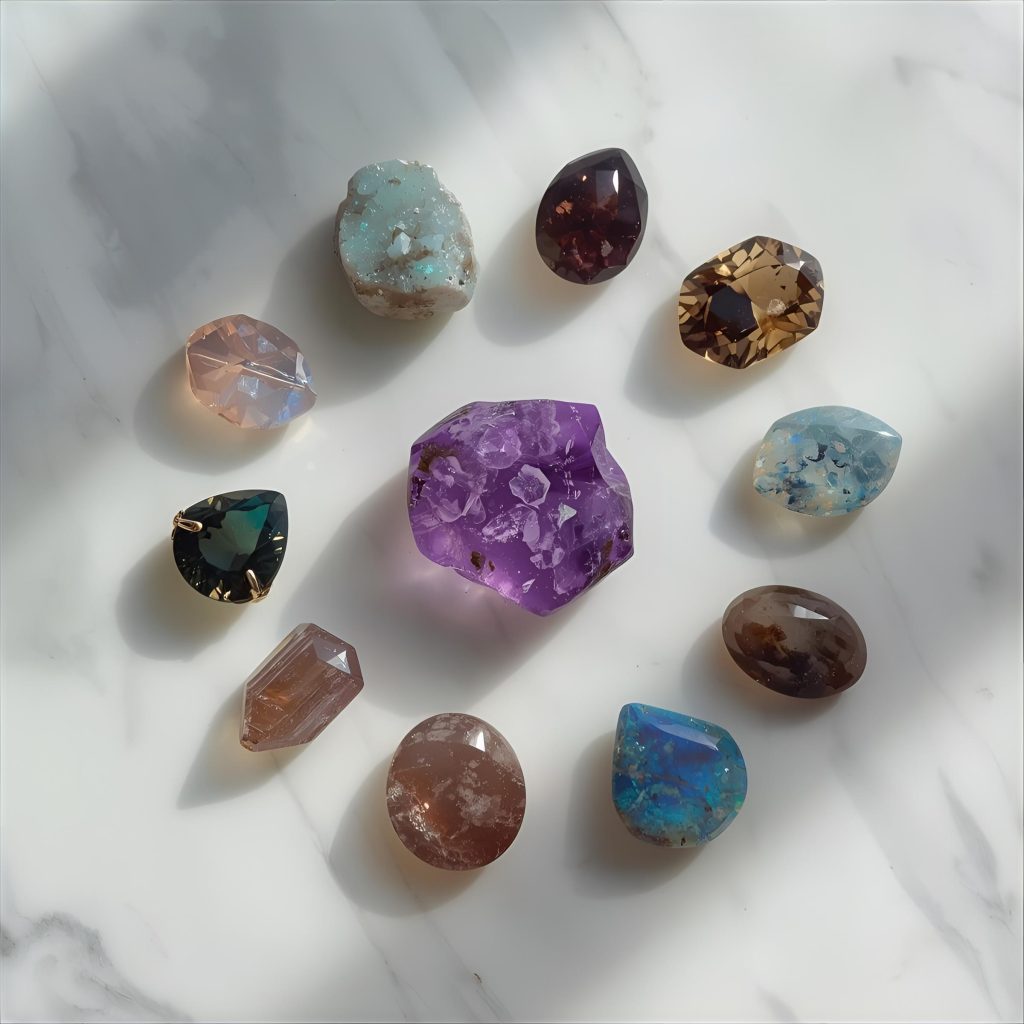
In the dazzling world of gemstones, rarity is not merely about how hard it is to find a stone — it’s about how uncommon its formation, color, and overall beauty are. Rare gemstones are born under extraordinary geological conditions that make each piece unique. These stones often exhibit unusual hues, crystal structures, or optical phenomena that set them apart from conventional gems like diamond, sapphire, or ruby.
Gemstones such as Taaffeite, Vesuvianite, and Dumortierite Quartz are perfect examples of nature’s exceptional craftsmanship. Their scarcity makes them treasures for collectors, investors, and spiritual enthusiasts alike. Because many rare stones are discovered only in a handful of global locations, their value can increase dramatically over time, especially when paired with a recognized certification from gemological labs like GIE Labs.
Why Collectors and Jewelers Love Rare Gemstones
Collectors seek rare gemstones because they offer individuality — no two are identical. Jewelers, on the other hand, love them for the opportunity to craft distinctive designs. The cobalt gem’s deep bluish tone, the mystical shimmer of opal quartz, and the oceanic feel of blue-green agate are ideal for statement pieces that tell a story.
For luxury brands, these gems symbolize exclusivity. Owning a Taaffeite or a translucent gemstone instantly distinguishes a piece from mass-market jewelry. Additionally, the metaphysical community values rare stones for their energetic and healing properties, which are often said to be stronger than those found in more common gemstones.
A Look Into the World of Rare and Exotic Stones
The term “rare gemstone” covers a wide spectrum — from minerals formed under intense heat and pressure to organic materials sourced from shells or sea life. Let’s glance at a few categories:
- Mineral-based rarities – Taaffeite, Vesuvianite, Feldspar crystal, Chalcopyrite, and Prasiolite.
- Organic and semi-organic materials – Biwa Pearls, Mother of Pearl, and Spiny Oyster Beads.
- Metaphysical and healing stones – Dendritic Opal, Psilomelane, and Pink Fluorite.
Each stone offers a blend of scientific intrigue and emotional allure. Some are prized for their colors, while others for their energy alignment with specific chakras or zodiac signs.
The Spiritual and Aesthetic Allure
Beyond their visual beauty, many rare gemstones are believed to carry spiritual significance. For instance, Dendritic Opal is often linked with growth and personal transformation, while Vesuvianite is said to inspire creativity and courage.
Ancient Vedic traditions have long used gemstones for astrology and energy healing. Vedic gems are carefully chosen based on planetary influences — they are believed to balance energies, attract prosperity, and enhance inner peace. Meanwhile, modern crystal healers use stones like Dumortierite Quartz and Opal Quartz for mental clarity and emotional grounding.
These beliefs, whether metaphysical or cultural, elevate gemstones beyond ornaments — turning them into talismans of meaning and intention.
Modern Demand for Rare Gemstones
In today’s gemstone market, rarity drives demand more than ever before. As mainstream buyers move beyond diamonds and sapphires, they are drawn toward stones that express individuality — the kind that no one else owns. Search trends show rising interest in keywords like translucent gemstones, cobalt gem, and taaffeite, reflecting a shift toward niche and distinctive options.
Collectors from New York, London, and Tokyo are especially investing in unique varieties with certification and traceable origins. Online platforms have also made it easier to buy loose gemstones, with transparency tools and gemstone fluorescence charts helping buyers understand authenticity and quality.
Examples of Exceptionally Rare Gems
Here are a few remarkable gemstones that exemplify rarity and beauty:
- Taaffeite: Once mistaken for spinel, it is one of the rarest gemstones on Earth — found only in Sri Lanka and Tanzania.
- Vesuvianite: A gem that bridges earthy greens and yellows, known for enhancing creativity and intuition.
- Biwa Pearls: Naturally elongated freshwater pearls from Japan, prized for their luster and irregular beauty.
- Dendritic Opal: Distinct for its fern-like inclusions, symbolizing nature’s growth.
- Chalcopyrite Crystal: Shimmering metallic surfaces that represent abundance and confidence.
- Green Tiger Eye Stone: A mesmerizing version of the classic Tiger Eye, known for grounding and protection.
Each gem has its own geological origin story and energetic vibration, making it more than a collectible — it becomes a personal connection to the Earth.
Challenges in Finding and Authenticating Rare Gemstones
Because of their limited occurrence, many rare gemstones face the problem of imitation. Synthetic or enhanced stones flood the market, often misleading untrained buyers. That’s why certified sources, detailed gemstone reports, and tools like the Gemstone Fluorescence Chart are essential in the purchasing process.
Professional gemologists can distinguish genuine stones by analyzing refractive indices, fluorescence behavior, and inclusions — ensuring that collectors receive authentic treasures.
A Glimpse of What’s Next
This introduction opens the door to an incredible journey through the world of rare gemstones. In the coming sections, readers will explore:
- How gemstone rarity and value are determined.
- The metaphysical meanings and healing properties of unique crystals.
- Tips on buying and collecting these exquisite stones responsibly.
Whether someone is drawn to turquoise stone colors, fascinated by abalone stone patterns, or intrigued by nano crystal gemstones, there’s something deeply human in the desire to hold a piece of Earth’s rare beauty.
Understanding Gemstone Rarity and Value
What Determines the Rarity of a Gemstone
The rarity of a gemstone is determined by how seldom it occurs in nature, how difficult it is to mine, and how unique its visual characteristics are. Stones like Taaffeite, Danburite, and Dumortierite Quartz are considered exceptionally rare because they form under very specific geological conditions. In contrast, stones like Quartz or Amethyst are more abundant, making them easier to find and less expensive.
In gemology, rarity is not only about supply — it’s also about demand. For example, translucent gemstones such as Prasiolite or Opal Quartz have recently surged in popularity because collectors appreciate their ethereal glow. This rising interest naturally drives up their market value. Similarly, the distinct color variations of Turquoise stone colors or the subtle elegance of Ivory stone contribute to their appeal and pricing.
Color and Transparency: The Heart of Value
Color is perhaps the most influential factor in determining a gemstone’s worth. The vibrancy, tone, and saturation of a stone’s color can significantly influence how collectors and jewelers perceive its beauty.
For instance:
- A Cobalt gem with an intense bluish tone will always attract higher value than a dull variant.
- Green Tiger Eye stone or Gold Tiger Eye with defined chatoyancy (cat’s-eye effect) are prized over cloudy specimens.
- Pink Purple stones like Pink Fluorite and Purple Jasper are sought for their rare hues, representing calmness and love.
Transparency is equally crucial. Translucent gemstones are often more desirable than opaque ones, as they reflect light more elegantly. However, certain opaque stones like Orange Jasper or Gray Jasper gain value for their earthy tones and natural inclusions that give each stone a distinctive pattern.
Cut and Shape: The Art Behind Beauty
While nature gives gemstones their raw beauty, cutting and shaping enhance it. Expert lapidaries shape rough stones into stunning pieces that maximize brilliance and color. A well-cut gemstone can transform a simple mineral into a luxurious masterpiece.
The Table cut gemstone style, one of the oldest cutting techniques, is making a comeback in fine jewelry. Its flat top and geometric symmetry highlight the inner clarity of translucent gems like Opal Quartz or Dumortierite Quartz. Other popular cuts include oval, emerald, and cushion, each emphasizing a gemstone’s personality.
Interestingly, gemstone shapes meaning plays a role in both aesthetic and metaphysical contexts. For example:
- Round cuts symbolize unity and eternity.
- Square cuts convey balance and stability.
- Heart-shaped gems represent love and compassion.
Collectors often choose gemstone shapes that align not just with fashion, but with the energy they wish to attract.
Origin and Mining Location
The location where a gemstone is mined also influences its rarity and value. For example:
- Taaffeite is found in only a few regions, such as Sri Lanka and Tanzania.
- Biwa Pearls originate from Japan’s Lake Biwa, renowned for their natural luster.
- Russian Serpentine and Epidote Rough are appreciated for their distinct green tones and mineral composition.
Certain countries have gained global reputations for producing high-quality stones. Buyers often prefer gems with traceable origins, as this transparency assures authenticity. Gemological reports from trusted institutions such as GIE Labs verify both the gemstone’s source and its properties.
Metaphysical and Healing Properties That Add Value
In modern crystal culture, a gemstone’s metaphysical energy contributes to its desirability. Collectors and healers value rare stones for their supposed healing vibrations, emotional balance, and spiritual alignment.
Here are a few examples from your keyword list and their metaphysical properties:
- Vesuvianite Properties: Known to promote creativity, courage, and personal growth.
- Dendritic Opal Metaphysical Properties: Encourages spiritual growth and helps connect with nature’s patterns.
- Pink Fluorite Healing Properties: Believed to bring calmness, emotional healing, and love.
- Hyalite Opal Properties: Enhances intuition and clears emotional blockages.
- Danburite Metaphysical Properties: Stimulates higher consciousness and connects with divine energy.
- Prasiolite Properties: Also known as Green Amethyst, linked with abundance and compassion.
For many buyers, these energetic qualities hold as much importance as the gem’s physical appearance. When a gemstone resonates with one’s spiritual beliefs, its value becomes deeply personal.
Natural vs. Treated or Synthetic Stones
In today’s market, one of the biggest challenges is differentiating between natural gemstones and synthetic or enhanced versions. Certain treatments — like heat, dyeing, or coating — are common to enhance color or clarity. However, these can affect a gemstone’s authenticity and long-term value.
For instance:
- Is Pink Onyx natural? Genuine Pink Onyx exists, but many versions are dyed to achieve vibrant hues.
- Is Green Tiger Eye natural? Yes, though some may be artificially colored for stronger tones.
- Magnesite vs Howlite: These two are often confused because both are used as imitations for Turquoise. Understanding their physical and chemical differences helps buyers make informed choices.
To ensure authenticity, buyers should always seek certifications from reliable gem testing centers like GIE Labs, which provide detailed reports on composition, treatments, and origin.
Gemstone Fluorescence and Optical Effects
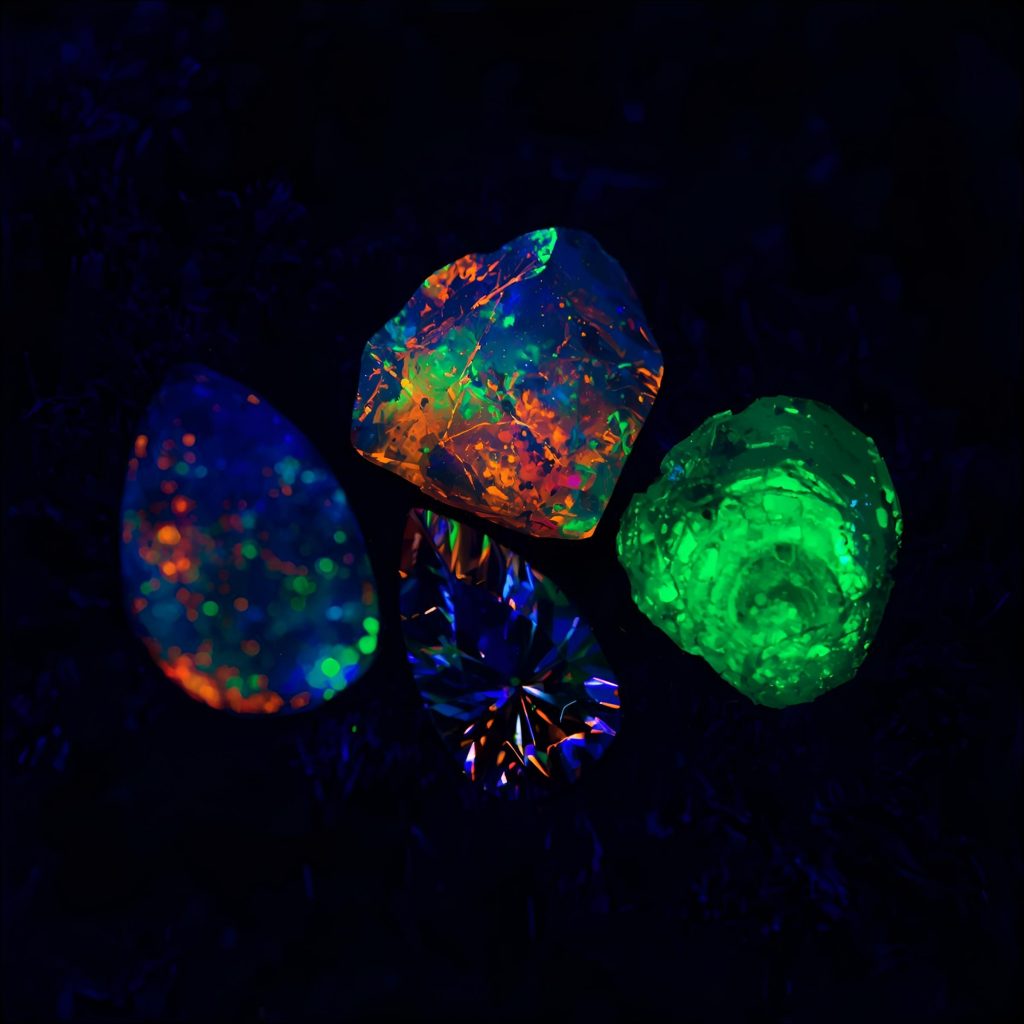
Certain gemstones exhibit fluorescence — they glow under ultraviolet light. This property can help identify stones or even increase their visual appeal. The Gemstone Fluorescence Chart is a useful reference for jewelers and collectors, showing how each gem reacts under specific lighting conditions.
Beyond fluorescence, other optical effects such as chatoyancy (in Tiger Eye), iridescence (in Abalone Stone and Mother of Pearl Stone), and play-of-color (in Opal Quartz) enhance value and uniqueness.
These light interactions are natural wonders that make each gemstone a living piece of art — dynamic, vibrant, and full of character.
Unique and Rare Materials Beyond Traditional Gems
Some of the world’s most fascinating rare stones don’t fit into the traditional gemstone category. For example:
- Abalone Stone and Mother of Pearl Stone come from the ocean, showcasing iridescent blues and greens.
- Oyster Stone and Spiny Oyster Beads are cherished for their coral-like textures and vibrant orange-to-purple hues.
- Watermelon Gemstones — such as watermelon tourmaline — display natural color zoning that mimics the fruit’s pink and green contrast.
- Sci-Fi Jasper and Orange Jasper combine earthy grounding with striking patterns, ideal for statement jewelry.
These materials have become favorites for designers seeking eco-friendly, natural, and sustainable alternatives to mainstream gemstones.
The Role of Technology and Certification
In the modern gem trade, technology plays a crucial role in determining gemstone value. Laboratories like GIE Labs use advanced spectroscopy and microscopy to confirm authenticity, detect treatments, and identify origin. Their certifications add transparency to a market that often faces issues of imitation and overpricing.
For collectors, a certificate from a recognized lab can significantly boost the gemstone’s market value. It’s also essential when reselling, as documented proof ensures credibility and trust.
Conclusion: The True Essence of Gemstone Value
The value of a gemstone lies not only in its rarity but in its story — where it was formed, how it was cut, and the emotions it evokes in its wearer. Whether it’s the radiant Blue Gem Turquoise, the mystical Hyalite Opal, or the elegant Biwa Pearls, each gemstone carries a fragment of Earth’s beauty and mystery.
In the world of collectors and healers, gemstones serve as both investments and instruments of self-expression. Their value is not only measured by carats or price per gram — it’s defined by the connection they create between nature and the human spirit.
Exploring Gemstone Colors and Meanings

Gemstones have fascinated humanity for centuries — not only for their beauty but for the meanings and emotions their colors evoke. Every shade tells a story, and each hue carries a vibration that resonates differently with those who wear or collect it. In this section, we’ll explore the most intriguing gemstone colors, their symbolic meanings, and how rare varieties like Blue Gem Turquoise, Pink Purple Stone, Orange Jasper, and Green Tiger Eye Stone continue to captivate gem enthusiasts around the world.
The Psychology of Gemstone Colors
Colors influence the human mind in subtle and profound ways. A gemstone’s color doesn’t just determine its beauty — it defines its identity. Collectors and designers often select stones based on their emotional symbolism, making color one of the most essential factors in gemstone choice.
Let’s explore what each gemstone color represents:
- Blue gemstones such as Cobalt Gem, Blue Green Agate, and Blue Gem Turquoise symbolize peace, calm, and communication. They’re believed to balance emotions and promote self-expression.
- Green gemstones like Green Jasper, Vesuvianite, and Prasiolite represent growth, healing, and abundance. The types of green turquoise found in various parts of the world echo these natural energies.
- Pink and purple gemstones, including Pink Fluorite, Purple Jasper, and Lavender Spinel, are associated with love, compassion, and inner strength.
- Orange stones such as Orange Jasper and Spiny Oyster Beads bring vitality and creativity, symbolizing warmth and passion.
- Gray gemstones, like Gray Jasper, embody neutrality, grounding, and balance — perfect for those seeking stability.
Each color vibrates with a different frequency, and when light passes through a gemstone, it becomes more than a mineral — it becomes an energy amplifier.
Blue Gemstones: Calm, Communication, and Clarity
Blue stones are among the most cherished in the world of gemology. They reflect the vastness of the sky and the depth of the ocean, symbolizing truth and peace.
1. Blue Gem Turquoise
One of the oldest known gemstones, Blue Gem Turquoise has been valued for thousands of years by ancient civilizations. The varying turquoise stone colors, ranging from sky blue to greenish-blue, are due to copper and iron traces within the mineral. Genuine turquoise — especially natural types of green turquoise — is rare and treasured by collectors.
Metaphysically, turquoise is said to protect the wearer from negative energy and bring calmness to the spirit. Its smooth surface and soothing color make it a perfect choice for spiritual jewelry.
2. Cobalt Gem
A Cobalt Gem is instantly recognizable by its intense, radiant blue tone. Often mistaken for sapphire, it symbolizes clarity and mental focus. Cobalt-infused gemstones are prized for their exceptional brilliance, and in metaphysical belief, they are known to enhance intuition and strengthen self-expression.
3. Blue Green Agate
This gemstone blends tranquil blue tones with earthy greens, representing emotional balance. Blue Green Agate is often used in meditation and healing practices because it harmonizes the heart and throat chakras, promoting clear and compassionate communication.
Green Gemstones: Balance, Renewal, and Growth
Green is the color of nature and life. It connects the wearer to the Earth’s grounding energy while encouraging renewal and emotional healing.
1. Green Tiger Eye Stone
The Green Tiger Eye Stone is an enchanting variation of the classic golden tiger eye. Known for its shimmering chatoyancy effect, this stone radiates protective energy. Whether worn as jewelry or carried as a talisman, it enhances courage and emotional resilience. But one question often arises — is green tiger eye natural?
Yes, natural green tiger eye exists, though it can also be heat-treated to intensify the hue. Collectors appreciate both versions for their beauty and spiritual symbolism.
2. Vesuvianite and Its Properties
Named after Mount Vesuvius in Italy, Vesuvianite comes in olive to bright green shades. The Vesuvianite properties include enhancing creativity, grounding, and courage. Its natural sparkle makes it ideal for artisan jewelry, and spiritually, it’s believed to help the wearer align with their true purpose.
3. Prasiolite: The Green Amethyst
Prasiolite properties are deeply connected to the heart chakra. Also known as green amethyst, it’s a rare gem formed when natural amethyst is heated, either by the Earth or human intervention. This stone symbolizes compassion and prosperity, making it popular among gemstone healers.
4. Epidote Rough
Epidote Rough crystals are dark green and often used in their raw form for energy work. They are said to encourage spiritual growth and improve perception. Their rugged texture makes them beautiful in raw gemstone displays.
Pink and Purple Gemstones: Love, Compassion, and Creativity
Romantic hues like pink and purple embody passion and imagination. They’ve always held a special place in jewelry design and crystal healing.
1. Pink Purple Stone
The Pink Purple Stone family includes stones like Pink Fluorite and Purple Jasper. These gems combine two of the most emotionally powerful colors — pink for love and purple for wisdom. Wearing them helps balance the emotional and spiritual self.
2. Pink Fluorite Healing Properties
Pink Fluorite is delicate and translucent, often admired for its internal glow. The pink fluorite healing properties include emotional cleansing, heart healing, and self-acceptance. It is a wonderful stone for those looking to overcome emotional trauma or anxiety.
3. Purple Jasper Meaning
Purple Jasper meaning revolves around peace, patience, and stability. It’s known as the “dream stone,” encouraging vivid dreams and clarity of thought. Many designers use it for artistic jewelry due to its deep, earthy tones and mesmerizing patterns.
4. Lavender Spinel
Lavender Spinel carries soft purplish tones that evoke calmness and serenity. While not as widely known as amethyst, it’s prized for its rarity and brilliance, often used in high-end jewelry collections.
Earthy and Neutral Gemstones: Strength and Grounding
Not all beauty shines with color — some of the most powerful gemstones are subtle and grounded.
1. Orange Jasper
With its vibrant, warm hue, Orange Jasper is known for energizing creativity and endurance. It’s often associated with vitality and motivation. Artisans love its durability and natural polish, making it ideal for beads, carvings, and talismans.
2. Gray Jasper
Gray Jasper is calming and balancing. It represents neutrality and endurance — a grounding stone for emotional and spiritual well-being. People often use it in meditation to stabilize their energy and reconnect with inner peace.
3. Oyster Stone & Spiny Oyster Beads
Oyster Stone and Spiny Oyster Beads are ocean treasures valued for their rich coral-like colors — from orange to purple. These organic gems are used in bohemian and Native American-inspired jewelry designs. Their natural tones bring warmth and connection to the sea’s energy.
4. Mother of Pearl Stone
The Mother of Pearl Stone displays iridescent waves of white, silver, and pastel colors. It’s associated with nurturing, femininity, and emotional balance. Its soft shimmer makes it a favorite in elegant pendants and statement rings.
Multi-Colored & Unique Stones
1. Watermelon Gemstones
Watermelon Gemstones are known for their pink-and-green color zoning, most famously seen in watermelon tourmaline. These stones represent joy, harmony, and balance between heart and mind — a natural wonder in every sense.
2. Chalcopyrite Crystal Meaning
With its metallic golden sheen, Chalcopyrite resembles gold and is often called the “Stone of the Mystic.” The chalcopyrite crystal meaning centers on prosperity and intuition, making it a favorite for those seeking both material and spiritual growth.
3. Nano Crystal Gemstone
A Nano Crystal Gemstone is a man-made, lab-grown gem designed for optical perfection. These stones display vivid color, perfect clarity, and durability — blending science with artistry. They are environmentally friendly alternatives to natural gems and are increasingly used in modern jewelry.
4. Taaffeite and Hyalite Opal
Taaffeite is one of the rarest gemstones on Earth — even rarer than diamond. Its subtle purple hue and exceptional brilliance make it a collector’s dream.
Hyalite Opal, on the other hand, glows vividly under UV light, making it one of the most fascinating fluorescent gemstones known. These two stones, though vastly different, both highlight nature’s extraordinary creativity.
Conclusion: The Color Spectrum of Earth’s Hidden Treasures
From the tranquil blues of Cobalt Gem and Blue Gem Turquoise to the grounding tones of Orange Jasper and Gray Jasper, every gemstone carries a unique frequency of light and emotion. These stones don’t just decorate — they connect people to the essence of nature. Whether used for jewelry, healing, or collection, gemstone colors serve as bridges between physical beauty and spiritual energy.
Each color, cut, and texture tells a story that has taken millions of years to form — a reminder that true beauty lies in diversity, depth, and th
e colors of the Earth itself.
Gemstone Shapes, Cuts, and Their Deeper Meanings
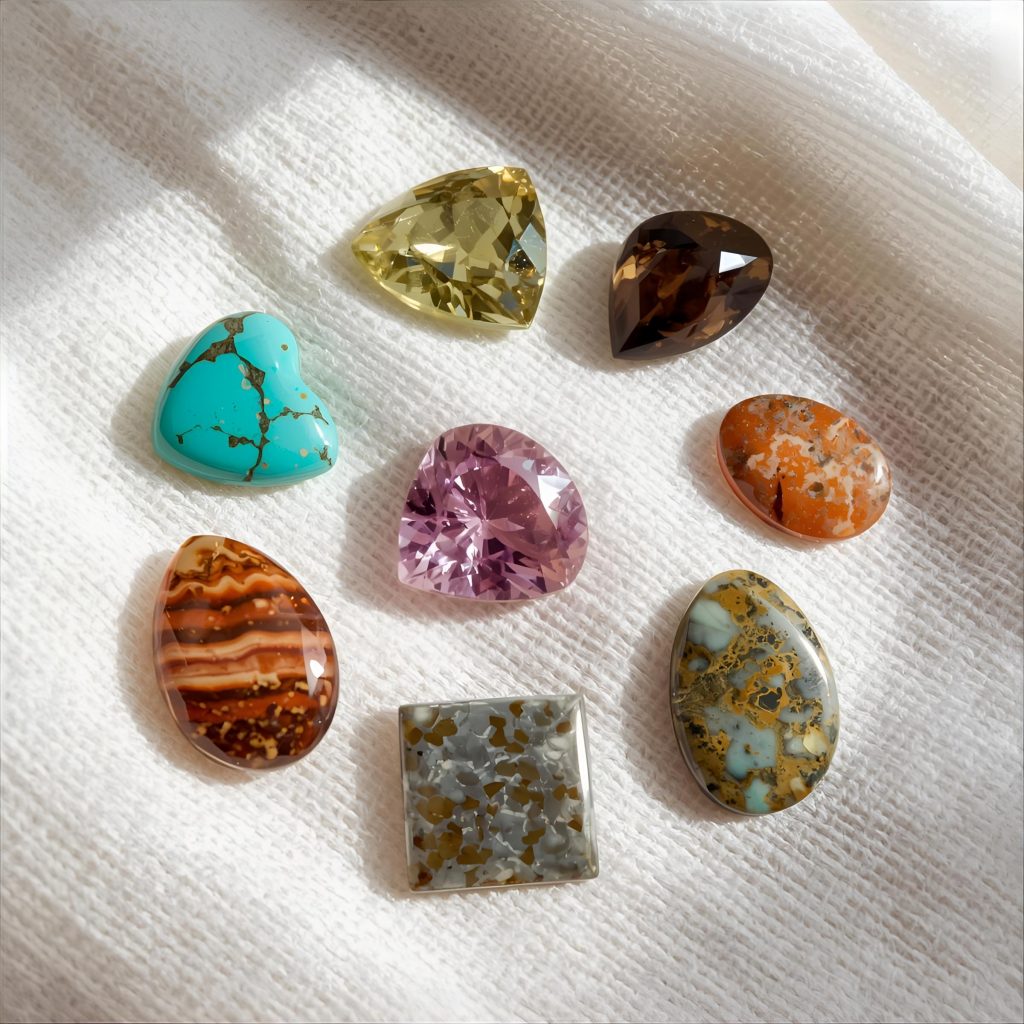
Gemstones are more than just sparkling minerals; they’re the Earth’s art — each one sculpted through natural forces over millions of years. But what truly brings out their beauty and energy is the way they’re shaped and cut. In gemology, the shape and cut determine not only the visual appeal but also the symbolic and energetic properties of each gem. From table cut gemstones to heart-shaped spinels, each style carries its own story and meaning.
The Art and Science of Gemstone Cutting
Gemstone cutting is a balance between art and precision. It’s the process that transforms rough crystals into mesmerizing treasures. Each angle, facet, and proportion influences how light interacts with the gem — enhancing brilliance, fire, and luster.
One of the oldest and most respected cuts is the table cut gemstone. Originating in the 15th century, this cut features a flat top and a few large facets, emphasizing clarity over sparkle. It was once popular for diamonds and sapphires but is now seeing a revival among collectors of vintage jewelry and translucent gemstones.
A table cut gemstone allows natural inclusions and internal textures to be visible, connecting the wearer directly to the gem’s geological origin. This transparency gives it both aesthetic and metaphysical depth.
Popular Gemstone Shapes and Their Symbolism
Every gemstone shape carries meaning, just like colors and types. Whether it’s a round, oval, or heart-shaped gem, each one resonates differently with the human psyche.
1. Round and Oval Cuts – Harmony and Eternity
Round and oval cuts are timeless. They symbolize unity, completeness, and infinity — making them perfect for engagement rings and spiritual talismans. These cuts are commonly used for vedic gems and mother of pearl stones, representing wholeness and peace.
2. Heart Shape – Love and Devotion
The spinel heart and pink purple stone in heart-shaped forms are romantic expressions of love. This shape amplifies the emotional vibration of the gem, making it ideal for gifts of affection or healing jewelry.
In gem therapy, heart-shaped stones are believed to open the heart chakra, especially when made from crystals like purple jasper or pink fluorite.
3. Pear and Teardrop Shapes – Emotion and Renewal
The pear cut resembles a falling drop of water, symbolizing tears of joy or renewal. Stones like blue gem turquoise and green jasper are often shaped in this form to channel calm, flow, and emotional cleansing.
4. Square and Emerald Cuts – Stability and Strength
A square cut signifies stability, confidence, and order. It’s often used for gems with deep symbolic meanings, like ivory stone, feldspar crystals, or vesuvianite. The emerald cut — a variation of the square — highlights clarity and inner depth, perfect for translucent gemstones that showcase the gem’s natural brilliance.
5. Cushion and Cabochon Cuts – Tradition and Healing
Cabochons are smooth, domed shapes with no facets. They are often used for chalcopyrite crystals, orange jasper, and green tiger eye stones. The rounded surface enhances the gem’s soothing vibration, often used in vedic gems and healing jewelry.
Cushion cuts, with their pillow-like appearance, blend vintage charm with modern sparkle — a favorite among designers who love mixing classic and contemporary aesthetics.
Gemstone Shapes Meaning: Symbolism and Spiritual Energy
The concept of gemstone shapes meaning is rooted in metaphysical traditions. Ancient civilizations believed the geometry of a stone could channel or amplify specific energies.
- Round and oval stones — represent infinity and spiritual balance.
- Square and rectangular stones — embody grounding, order, and manifestation.
- Heart-shaped gems — symbolize compassion and emotional healing.
- Teardrop cuts — channel emotional release and renewal.
- Star or radiant cuts — enhance vitality and self-expression.
Many crystal healers align these shapes with the body’s chakras. For example, a heart-shaped green tiger eye stone is believed to activate love energy, while a round blue gem turquoise balances the throat chakra, promoting clear communication.
Modern and Rare Gem Cuts in Jewelry Design
In modern jewelry, innovation meets tradition. New gemstone cuts continue to emerge, influenced by art, technology, and demand for individuality.
Nano Crystal Gemstones and Designer Shapes
With the rise of nano crystal gemstones, jewelers now have access to perfectly clear, brilliantly colored gems that can be shaped into nearly any form. These synthetic stones allow for experimental designs like double-sided hearts, geometric hexagons, and asymmetric cuts that wouldn’t be practical for natural stones.
Abalone Stone and Mother of Pearl Artistry
Organic gemstones like abalone stone and mother of pearl stone are often cut into freeform or mosaic shapes. Their iridescent surfaces reflect light beautifully, making them ideal for decorative inlays and bohemian-style jewelry.
Watermelon Gemstones in Artistic Cuts
Watermelon gemstones, known for their dual pink-and-green hues, are often carved into slices that resemble the fruit itself. Their natural color zoning means no two stones are ever alike, celebrating uniqueness in every piece.
Specialty Gem Cuts and Rare Shapes
Beyond the traditional styles, some rare cuts stand out in both jewelry and gem collecting:
- Fantasy Cuts – Artistic carvings with unique angles and grooves that manipulate light in creative ways.
- Buff Top Cut – A hybrid between cabochon and faceted designs, often used for dendritic opal or opal quartz to enhance depth.
- Star Cuts – Highlight the internal patterning of stones like hyalite opal and danburite.
- Table and Step Cuts – Found in table cut gemstones, these give prominence to clarity and internal glow.
Gemologists appreciate these cuts not only for their appearance but for how they influence the gem’s metaphysical resonance.
How Shape Affects Energy Flow
According to metaphysical studies, a gem’s shape determines how energy flows through it.
- Pointed or triangular shapes focus energy.
- Round or oval shapes distribute energy evenly.
- Square shapes ground energy.
- Spiral or curved shapes promote movement and creativity.
For example, a spinel heart channels love energy outward, while a table cut gemstone emits calm, steady vibrations — ideal for meditation or focus.
Selecting the Perfect Shape
Choosing a gemstone shape depends on purpose:
- For jewelry: focus on personal taste and how the stone complements the design.
- For metaphysical or healing use: select shapes that align with energy goals (e.g., heart for love, square for grounding).
- For collectors: look for rare shapes or precision cuts that increase long-term value.
The combination of shape, cut, and color determines a gemstone’s true identity. A lavender spinel in heart shape tells a story of emotional calmness, while a table cut gemstone like a green jasper radiates strength and connection to Earth.
Conclusion: The Shape of Beauty and Energy
Every gem shape is a fusion of human craftsmanship and nature’s perfection. Whether it’s the timeless elegance of a table cut gemstone, the romantic symbolism of a spinel heart, or the grounded aura of a square-cut jasper, each form transforms raw mineral energy into wearable art.
Gemstone shapes are not just visual choices — they are spiritual blueprints, guiding how energy, emotion, and beauty flow from the Earth to the soul.
The Metaphysical and Healing Powers of Gemstones
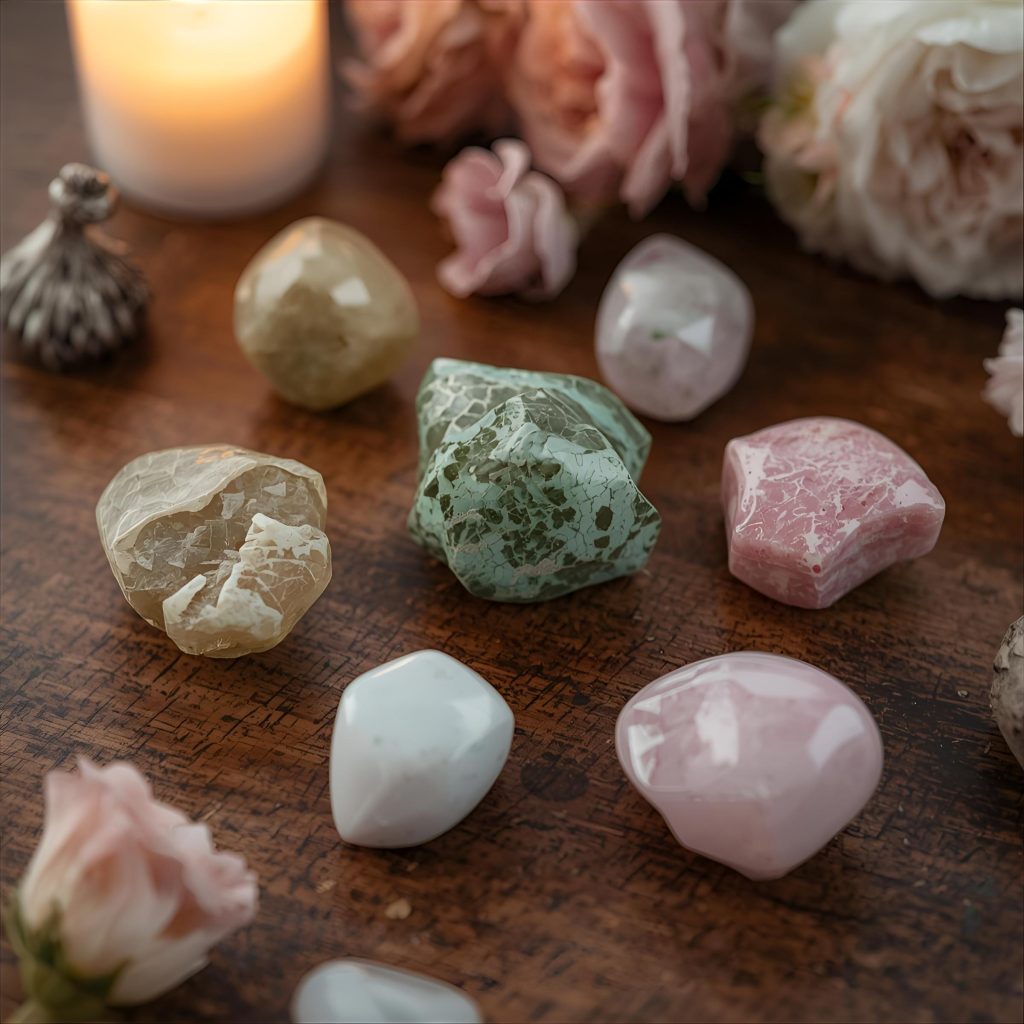
Throughout history, gemstones have been revered not just for their beauty but for their mysterious ability to influence energy, emotion, and spirit. From ancient Vedic traditions to modern crystal healing, people have turned to gemstones to restore balance, attract positivity, and amplify spiritual strength. Each gem carries a unique vibration, shaped by the Earth’s energy and its own chemical composition, color, and structure.
This section explores some of the most fascinating metaphysical gemstone properties, from vesuvianite to psilomelane, and how they are used in healing and energy work today.
Understanding Gemstone Energy and Metaphysics
The belief that gemstones hold energy is not new — it’s rooted in the concept that everything in the universe vibrates at a certain frequency. Gemstones, formed deep within the Earth, are said to store the planet’s natural power.
In Vedic gems, these energies correspond to planetary influences, each stone resonating with a specific celestial vibration.
For instance, sapphire is linked to Saturn, ruby to the Sun, and emerald to Mercury. Wearing the correct gemstone is believed to strengthen favorable planetary effects and shield against negative ones.
However, beyond astrology, modern metaphysics views gemstones as tools that harmonize the mind, body, and soul.
Vesuvianite Properties and Their Energetic Meaning
Vesuvianite, also known as idocrase, is a stunning green crystal found near volcanic deposits. The vesuvianite properties are associated with courage, creativity, and transformation.
Metaphysically, this stone encourages spiritual growth by helping individuals break free from fear and self-limitation. It bridges the heart and mind, promoting emotional clarity and personal empowerment.
Those drawn to green gemstones often resonate with the heart chakra — vesuvianite strengthens that connection, bringing compassion and balance.
Prasiolite Properties: The Green Amethyst of Renewal
Often called the green amethyst, prasiolite is one of the few naturally green quartz varieties. The prasiolite properties align with renewal, growth, and spiritual awakening.
It’s a stone of transformation that helps convert negative emotions into understanding and love. Prasiolite amplifies compassion while grounding the heart in truth.
Healers often use this gem to balance the emotional body, especially during meditation or energy cleansing rituals.
Dendritic Opal Metaphysical Properties: Growth and Inner Peace
Dendritic opal carries natural inclusions resembling tree branches, symbolizing growth and expansion. The dendritic opal metaphysical properties emphasize stability, peace, and alignment with nature.
This gemstone promotes deep meditation, encouraging spiritual maturity and patience. Its soft energy helps dissolve stress, making it perfect for people who seek inner calm amidst life’s chaos.
When combined with grounding crystals like gray jasper or orange jasper, dendritic opal forms a powerful energetic trio for emotional healing and endurance.
Danburite Metaphysical Properties: Spiritual Light and Clarity
Danburite is a high-vibration crystal that radiates pure, angelic energy. The danburite metaphysical properties are linked to spiritual clarity, forgiveness, and connection to higher realms.
Healers often call it a “stone of light,” as it activates the crown chakra and promotes communication with divine energies.
Its gentle vibration helps release anxiety and invites serenity — ideal for meditation, dream work, or emotional purification.
When worn as jewelry or kept near the bedside, danburite can encourage lucid dreams and deeper insight.
Psilomelane Metaphysical Meaning: Protection and Emotional Strength
Psilomelane, a rare black mineral, holds protective energy that shields against negativity. The psilomelane metaphysical meaning is tied to emotional resilience and self-control.
It grounds the wearer, dissolves confusion, and promotes rational decision-making. Spiritually, psilomelane works as an energy stabilizer — absorbing chaotic frequencies and transforming them into calm focus.
Many practitioners use it in meditation to overcome emotional blockages and strengthen intuition.
Hyalite Opal Properties: The Glow of Inspiration
Hyalite opal is a luminous, glassy variety that glows under UV light — a feature noted in the gemstone fluorescence chart. Its metaphysical properties represent inspiration, creativity, and spiritual illumination.
Because of its ethereal glow, hyalite opal is often associated with inner light — reminding its bearer that hope and wisdom reside within.
This stone harmonizes well with opal quartz properties, enhancing mental clarity and intuitive awareness.
Opal Quartz Properties: Harmony and Transformation
Opal quartz combines the clarity of quartz with the iridescence of opal, creating a gem of harmony and transformation. The opal quartz properties encourage openness to new experiences while stabilizing the emotions.
It acts as a bridge between thought and feeling, making it perfect for artists, writers, and anyone seeking balance between logic and intuition.
When used in meditation, it aligns all chakras and amplifies the effects of nearby crystals.
Pink Fluorite Healing Properties: Love and Emotional Healing
Pink fluorite is a gentle crystal associated with the heart chakra. The pink fluorite healing properties include emotional healing, self-love, and forgiveness.
It softens hardened emotions, helping one reconnect with inner compassion. This stone is especially useful for those recovering from emotional trauma or heartbreak.
In crystal grids, pink fluorite works well with green tiger eye stone or biwa pearls, amplifying calmness and emotional release.
Dumortierite Quartz Meaning: Patience and Mental Clarity
Dumortierite quartz is known as the “stone of patience.” The dumortierite quartz meaning revolves around mental focus, self-discipline, and understanding.
It helps its user stay calm in difficult situations and encourages logical thinking. This gem’s serene blue hue resonates with the throat chakra, promoting clear communication.
Students and professionals often keep dumortierite quartz on their desks to enhance learning and decision-making abilities.
Chalcopyrite Crystal Meaning: Manifestation and Joy
Chalcopyrite, with its golden metallic sheen, is known as the “stone of happiness.” The chalcopyrite crystal meaning centers on abundance and manifestation.
It helps attract prosperity and amplifies confidence. This vibrant crystal resonates with the solar plexus chakra, empowering creativity and determination.
When paired with gold tiger’s eye, it creates a dynamic energy field that draws success and optimism.
Epidote Rough and Its Healing Vibration
Though not always polished, epidote rough carries strong healing vibrations. It amplifies whatever energy is present — positive or negative — making self-awareness crucial when using it.
Epidote enhances perception, encourages personal growth, and removes emotional stagnation. It’s often used in grids or altars to accelerate manifestation goals.
Combined with feldspar crystal properties, epidote boosts self-esteem and creative inspiration.
Russian Serpentine and Emotional Detox
Russian serpentine is a deep green crystal associated with emotional detoxification and protection. It’s a traditional stone for clearing blocked energy and aligning all chakras.
Healers use it to relieve anxiety, fear, and chronic stress. In vedic gems, serpentine is sometimes linked to Kundalini energy, promoting spiritual awakening through gradual transformation.
Gray Jasper and Green Jasper Properties
Gray jasper provides grounding and emotional stability. It helps calm the mind during stressful periods and promotes patience.
Meanwhile, the green jasper properties symbolize balance, compassion, and connection to nature. Green jasper strengthens endurance and perseverance, ideal for those seeking spiritual and physical vitality.
Orange Jasper and Purple Jasper Meaning
Orange jasper stimulates energy and creativity. It’s associated with courage and enthusiasm.
The purple jasper meaning centers around wisdom and tranquility. This color variation helps open the third eye chakra, enhancing spiritual insight and intuition.
Together, these jasper varieties bring harmony between the physical and spiritual worlds.
Using Gemstones for Healing and Meditation
Each gemstone can be used in specific ways for maximum benefit:
- Wearing jewelry: Direct skin contact helps transfer subtle energies.
- Meditation: Holding gemstones like prasiolite, danburite, or pink fluorite deepens awareness.
- Elixirs: Some stones can be infused in water (indirectly) for vibrational healing.
- Grids and altars: Combining stones like psilomelane and opal quartz amplifies intentions.
For beginners, it’s best to start with one or two stones, cleansing them regularly and using them with clear intentions.
Conclusion: The Healing Symphony of the Earth
Each gemstone carries the whisper of the Earth — a note in nature’s great symphony of healing and transformation.
From the courage of vesuvianite to the gentle love of pink fluorite, and from the grounding force of gray jasper to the radiance of hyalite opal, every crystal contributes its unique vibration to life’s harmony.
In essence, gemstones are not just decorative treasures — they are companions for emotional healing, spiritual evolution, and personal empowerment.
Rare and Unique Gemstones of the World

In the enchanting realm of gemstones, some stand out not only for their beauty but also for their sheer rarity. These treasures are often found in limited locations, formed under extraordinary geological conditions that make each piece unique. Collectors, healers, and gem enthusiasts treasure them for their translucent brilliance, unusual colors, and powerful metaphysical energy.
This section explores some of the world’s rarest gemstones — including taaffeite, cobalt gem varieties, and vibrant watermelon gemstones — as well as the fascinating stories and meanings behind them.
Taaffeite – The Gemstone Discovered by Accident
Among the rarest gems on Earth, taaffeite (pronounced “tarfite”) holds a story that sounds almost magical. It was discovered in 1945 by gemologist Richard Taaffe, who found a cut stone that was initially mistaken for a spinel. Upon closer inspection, it turned out to be an entirely new gemstone.
Taaffeite is a naturally occurring mineral found in Sri Lanka, Tanzania, and Myanmar. Its colors range from soft mauve to vivid lavender, and it’s prized for its subtle transparency and brilliance.
Spiritually, taaffeite is known as a stone of enlightenment and calm. It enhances mental clarity, spiritual awareness, and peace — qualities that make it ideal for meditation and emotional balance. Due to its scarcity, taaffeite is one of the most sought-after stones in high-end jewelry markets.
Cobalt Gem: The Radiant Blue Wonder
When gem collectors mention the term cobalt gem, they often refer to stones infused with cobalt’s deep blue hue — particularly cobalt blue spinel and cobalt-bearing glass gems. The color is both intense and mesmerizing, reflecting light with stunning depth.
Cobalt elements within a crystal lattice give the gem its vibrant bluish tones. Because of this rare coloration, cobalt gems are highly prized among gemstone enthusiasts.
Spiritually, cobalt-colored stones symbolize communication, intuition, and higher consciousness. They stimulate the throat chakra, encouraging confidence and honest expression. Whether set in a ring or left as a loose gemstone, these radiant blue treasures never fail to captivate.
Translucent Gemstones: Nature’s Hidden Light
One of the most alluring features of many precious stones is their translucence — the ability to let light pass through softly. Translucent gemstones such as chalcedony, opal, prasiolite, and rose quartz create a delicate glow that feels almost ethereal.
In gemology, translucence indicates purity and quality, while in metaphysical terms, it represents clarity and spiritual openness. These gems are often used during meditation or energy work to amplify intuition and emotional awareness.
Among collectors, translucent gemstones hold special appeal because their light reflection and color depth change under different lighting conditions, adding to their mystery and charm.
Gemstone Shapes and Their Meanings
Every gemstone shape carries symbolic meaning and energy flow. Beyond beauty, the gemstone shapes meaning reflects how energy moves through a crystal.
- Round cut: Represents wholeness, harmony, and unity.
- Oval shape: Encourages creativity and emotional balance.
- Table cut gemstone: An ancient style emphasizing flat surfaces — ideal for channeling focused energy.
- Heart shape (like spinel heart): Symbolizes love and emotional healing.
- Square or princess cut: Reflects stability, structure, and grounding.
For spiritual work, the table cut gemstone is especially powerful. Its broad surface enhances clarity and energy concentration, making it suitable for both crystal grids and meditation practices.
Watermelon Gemstones – The Symbol of Joy and Balance
Few gems capture the imagination like watermelon gemstones, named for their striking combination of pink, green, and sometimes white hues. The most famous among them is watermelon tourmaline, though other multi-colored stones share this nickname.
Metaphysically, these gems symbolize balance between heart and mind, bringing joy and harmony. The pink tones represent love, while the green signifies healing and growth.
Watermelon gemstones are popular in energy healing and chakra balancing because they simultaneously activate the heart chakra and connect to the Earth’s grounding energy.
Nano Crystal Gemstone – The Fusion of Technology and Nature
The nano crystal gemstone is a modern innovation — a lab-created material designed to mimic the optical beauty and durability of natural gemstones. While not mined from the Earth, these gems are engineered to have stunning clarity and vibrant color.
Unlike imitation stones, nano crystal gemstones contain real crystalline structures, giving them brilliance similar to natural counterparts like sapphire or garnet.
They’re eco-friendly and affordable alternatives for jewelry enthusiasts who want the sparkle of fine gems without environmental impact. Many spiritual practitioners even believe these stones retain energy resonance, as the crystal lattice still vibrates harmoniously with the body’s energy field.
Blue-Green Agate – The Stone of Emotional Harmony
Blue-green agate is a captivating banded stone that radiates calm and serenity. It combines the soothing blue of tranquility with the healing green of nature, forming an ideal gemstone for emotional balance.
Metaphysically, blue-green agate enhances communication, encourages self-acceptance, and aligns the heart and throat chakras.
It’s often used by healers to release past emotional wounds and foster new beginnings. Its translucent quality adds depth and beauty, making it equally appealing to collectors and jewelry designers.
Oyster Stone and Spiny Oyster Beads
Oyster stones and spiny oyster beads are organic treasures derived from the ocean’s depths. Their rich shades — orange, red, purple, and white — are beloved in jewelry-making, especially in Native American and coastal designs.
These materials carry the energy of the sea, symbolizing adaptability, emotional cleansing, and connection to nature. Wearing jewelry made from spiny oyster beads or mother of pearl stone is believed to calm the mind and attract prosperity.
Because of their natural variations, no two oyster stones are alike — making each piece of jewelry a true one-of-a-kind work of art.
Mother of Pearl Stone: The Essence of Ocean Calm
Derived from the iridescent lining inside mollusk shells, the mother of pearl stone represents peace, purity, and nurturing energy. It’s often used in spiritual healing to soothe emotional distress and promote inner harmony.
In metaphysics, this stone activates the sacral and heart chakras, encouraging creativity, love, and emotional flow. Its soft luster and natural shimmer make it a favorite for elegant jewelry pieces.
Magnesite vs Howlite – The Look-Alikes of Calmness
Two stones often confused for one another are magnesite and howlite. Both are white with gray veining, yet their properties and energies differ.
Magnesite is known for its calming and meditative effects, helping release stress and emotional pain.
Howlite, on the other hand, aids in patience and communication.
Collectors and healers use both, but understanding the distinction between magnesite vs howlite ensures accurate selection for spiritual or decorative purposes.
Turquoise Stone Colors and Types of Green Turquoise
Turquoise is among the oldest and most cherished gemstones in history. Its range of turquoise stone colors — from sky blue to deep green — reflects the mineral composition of copper, iron, and aluminum.
There are various types of green turquoise, including lime, mint, and olive shades. Each variety carries unique beauty and metaphysical resonance.
Blue turquoise connects with communication and spiritual truth, while green turquoise enhances emotional healing and prosperity.
Wearing turquoise is believed to protect travelers, attract good fortune, and strengthen the connection between the physical and spiritual realms.
Gemstone Fluorescence Chart: Hidden Light Within Stones
One of the lesser-known wonders in gemology is fluorescence — the ability of certain stones to glow under ultraviolet light. The gemstone fluorescence chart helps identify which gems exhibit this trait.
For instance:
- Hyalite opal glows bright green.
- Diamond shows blue fluorescence.
- Fluorite reveals shades of purple or blue.
Metaphysically, fluorescence symbolizes a gem’s “hidden energy” — a reminder that even within darkness, light persists. Collectors often appreciate these luminous effects for their scientific and spiritual significance.
Sci-Fi Jasper – The Gem of Imagination
Sci-fi jasper is a rare and visually stunning gemstone known for its otherworldly patterns and vivid colors. Its swirling designs resemble cosmic landscapes, making it a favorite among collectors and jewelry designers.
Spiritually, sci-fi jasper stimulates creativity and imagination. It encourages thinking beyond limits and connecting with higher consciousness.
Artists and visionaries use it to spark inspiration and manifest new ideas.
Conclusion: Celebrating the Wonders of the Earth
From taaffeite’s rare elegance to the vivid blues of cobalt gem, and the ocean’s beauty in oyster stone and mother of pearl, the world of gemstones is endlessly fascinating. Each gem — natural or synthetic — holds a story of energy, color, and meaning.
For collectors, healers, or anyone drawn to nature’s artistry, these rare gemstones remind us of the Earth’s power to create beauty beyond imagination.
Gemstone Symbolism and Cultural Significance
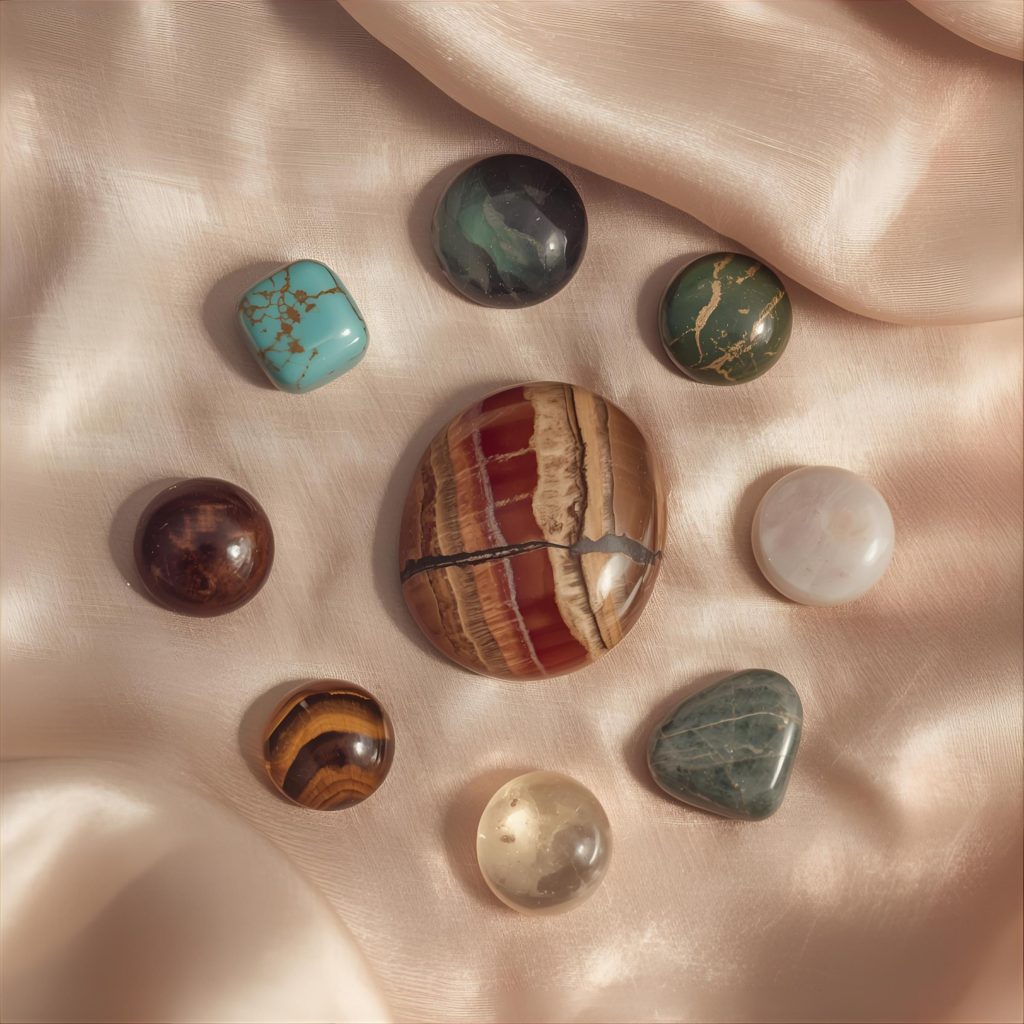
For thousands of years, gemstones have fascinated civilizations not only for their beauty but also for their symbolism, spiritual power, and cultural importance. Across continents and belief systems, people have seen gemstones as gifts from the Earth — objects of protection, healing, and divine energy.
From the ancient Vedic traditions of India to modern holistic practices, each gemstone tells a story — a story of connection between humankind and the cosmos.
Vedic Gems and Their Spiritual Power
In the ancient Indian system of astrology known as Vedic astrology, or Jyotish, gemstones are more than ornaments — they are cosmic tools. Each Vedic gem is associated with a specific planet and worn to balance the energies influencing one’s destiny.
For example:
- Ruby represents the Sun — symbolizing strength, vitality, and leadership.
- Pearl corresponds to the Moon — enhancing emotional stability and peace.
- Emerald represents Mercury — boosting intellect and communication.
- Yellow Sapphire (Pukhraj) symbolizes Jupiter — bringing prosperity and wisdom.
- Blue Sapphire (Neelam) channels Saturn’s energy — fostering discipline and spiritual growth.
The belief is that wearing the correct Vedic gem aligns the wearer’s vibration with the planet’s positive frequencies, promoting harmony in health, wealth, and relationships.
Gemologists and spiritual healers often provide gem recommendations based on an individual’s birth chart, ensuring the selected stone resonates with their planetary alignment.
The Hidden Science of Gemstone Energy
Beyond astrology, gemstones are believed to store and transmit vibrational energy. This concept — recognized in both ancient and modern metaphysical studies — is why certain stones are used for healing, protection, or manifestation.
Crystals such as quartz, tourmaline, and feldspar crystal have natural piezoelectric properties — meaning they can generate an electrical charge when subjected to pressure.
This scientific fact forms the foundation of the belief that gemstones can influence human energy fields, also known as auras.
- Feldspar crystal properties include enhancing creativity and self-awareness.
- Chalcopyrite crystal meaning relates to joy, abundance, and clearing negative thought patterns.
- Epidote rough stones amplify positive emotions and aid in spiritual growth.
Even modern energy healers use gemstone grids and wearable jewelry to channel this vibrational energy for healing and meditation.
Cultural Symbolism: Gems Through Civilizations
Gemstones have played a vital role across ancient civilizations — not just for adornment, but for rituals, spiritual protection, and royal power.
1. Ancient Egypt
Pharaohs and priests used turquoise, lapis lazuli, and carnelian for amulets and jewelry, believing they connected the soul with the divine afterlife. Mother of pearl stone and oyster stone were symbols of purity and rebirth.
2. Greece and Rome
The Greeks associated gemstones with gods and heroes. Amethyst protected against intoxication, while emeralds symbolized fertility and foresight. Romans valued table cut gemstones for signet rings used in official seals.
3. China
In Chinese culture, jade is the stone of heaven — representing virtue, harmony, and immortality. Turquoise stone colors, particularly green and blue, are thought to balance Yin and Yang energies.
4. Native American Tribes
Tribes across North America have used spiny oyster beads and turquoise for ceremonial adornments. These gems represented protection, rain, and the connection between Earth and Sky.
5. Medieval Europe
During the Middle Ages, gemstones were believed to have healing powers. Garnet symbolized faith and courage, while sapphire represented divine favor. Kings wore gemstone-studded crowns as both decoration and spiritual armor.
Gemstone Colors and Their Meanings
Color symbolism plays a significant role in understanding gemstones. Each hue resonates with certain chakras and emotional energies. Here’s how various colors express meaning:
- Blue Gem Turquoise / Blue-Green Agate: Peace, wisdom, communication.
- Green Tiger Eye Stone / Types of Green Turquoise: Growth, renewal, prosperity.
- Pink Purple Stone / Purple Jasper Meaning: Love, intuition, and creativity.
- Orange Jasper: Vitality, courage, and confidence.
- Ivory Stone Meaning: Purity, spiritual clarity, and protection.
- Gold Tiger’s Eye: Strength, motivation, and manifestation.
By aligning gemstone colors with emotional intent, wearers can create personalized energy combinations to enhance well-being and focus.
Modern Gemstone Symbolism in Fashion and Healing
Today, gemstones continue to serve both aesthetic and spiritual purposes. Designers use stones like biwa pearls, blue gem turquoise, and prasiolite to craft contemporary pieces that blend elegance with energy.
Meanwhile, holistic healers use gems such as:
- Danburite (clarity and angelic connection).
- Psilomelane (grounding and protection).
- Dumortierite quartz (mental focus and patience).
- Pink fluorite (emotional healing).
The danburite metaphysical properties are especially significant, as it’s known as a high-vibration crystal that connects to divine light and facilitates meditation.
Likewise, dendritic opal metaphysical properties enhance personal growth and help one embrace life’s patterns.
Each gemstone’s symbolism continues to evolve with human consciousness — bridging ancient wisdom and modern understanding.
Gemstone Symbolism in Relationships and Personal Growth
Gemstones also carry emotional meanings tied to relationships, milestones, and self-discovery.
- Engagement and Love: Stones like spinel heart, pink tourmaline, and lavender spinel symbolize romantic connection and devotion.
- Personal Growth: Vesuvianite properties encourage courage and transformation, making it ideal for those seeking positive change.
- Healing: Opal quartz properties balance the emotional body and restore harmony after emotional exhaustion.
Many people choose gemstones intuitively — the one they’re drawn to often reflects what their spirit currently needs most.
Gemstones and the Chakras
In holistic healing, gemstones correspond to the body’s seven major chakras — each resonating with certain colors and frequencies.
| Chakra | Color | Gemstones | Purpose |
|---|---|---|---|
| Root | Red | Garnet, Red Jasper | Grounding & security |
| Sacral | Orange | Orange Jasper, Carnelian | Creativity & passion |
| Solar Plexus | Yellow/Gold | Citrine, Gold Tiger’s Eye | Confidence & energy |
| Heart | Green/Pink | Green Tiger Eye, Pink Fluorite | Love & compassion |
| Throat | Blue | Blue Gem Turquoise, Blue-Green Agate | Expression & truth |
| Third Eye | Indigo | Lapis Lazuli, Purple Spinel | Intuition & wisdom |
| Crown | White/Violet | Taaffeite, Danburite | Spiritual awareness |
Balancing these chakras with specific gemstones can enhance overall physical, mental, and spiritual harmony.
The Modern Appeal of Gemstone Symbolism
Today’s collectors, healers, and jewelry designers all draw inspiration from gemstone symbolism. In a fast-paced world, people seek meaning — and gemstones offer a tangible connection to nature and spirit.
Whether it’s wearing a biwa pearl necklace for calmness or keeping a feldspar crystal at one’s workspace for creativity, gemstones serve as daily reminders of intention and balance.
The combination of beauty, history, and metaphysical power makes each gemstone not just a luxury, but a language — one that transcends culture, time, and belief.
Conclusion: The Universal Language of Gemstones
From Vedic gems that guide the planets to blue gem turquoise symbolizing peace, gemstones speak in colors, patterns, and vibrations understood across civilizations.
Their enduring symbolism — love, courage, prosperity, and spiritual awakening — reminds humanity of its deep connection with the Earth. Each stone carries ancient wisdom, offering harmony to those who listen to its energy.
The Birth of Gemstones — From Earth’s Core to Human Hands
Every gemstone has a journey — from deep within the Earth’s crust, formed over millions of years through pressure, heat, and mineral magic, to shining brilliantly in a jeweler’s hand. This transformation tells a story of geological wonder, natural artistry, and spiritual significance.
Let’s explore how gemstones are formed, their types, and the fascinating processes that shape their beauty and energy.
The Geological Origins of Gemstones
Gemstones are crystals of minerals that have formed through natural geological processes. These processes occur under specific conditions involving heat, pressure, and chemical composition.
There are four major geological environments where gemstones form:
1. Igneous Gem Formation
Igneous gemstones form when magma cools deep within the Earth or after a volcanic eruption. As the molten rock slowly solidifies, elements combine to form crystals.
Examples include:
- Peridot, found in volcanic rocks.
- Topaz and tourmaline, forming in gas cavities of lava.
- Feldspar crystal varieties like moonstone and labradorite, which crystallize from molten magma.
The feldspar crystal properties — iridescent glow and optical effects — are a result of the layering and cooling process in these igneous formations.
2. Metamorphic Gem Formation
When existing rocks are subjected to intense heat and pressure, they transform, creating new minerals. These are metamorphic gemstones.
Examples include:
- Garnet, known for its toughness and vibrant color range.
- Jade, formed under immense geological pressure.
- Chalcopyrite crystal and epidote rough, both products of metamorphic reactions that alter the rock’s chemical composition.
The chalcopyrite crystal meaning is tied to transformation — fittingly reflecting the metamorphic forces that create it.
3. Sedimentary Gem Formation
Sedimentary gemstones form through deposition, precipitation, or biological activity. Minerals in water settle in layers, gradually forming stones.
Examples include:
- Opal, created from silica-rich water seeping through the Earth.
- Malachite, with its striking green banding, formed by copper-rich waters.
- Spiny oyster beads, created from organic shells — a combination of natural and biological processes.
- Mother of pearl stone and abalone stone, both products of marine organisms forming nacre layers over time.
The oyster stone is particularly fascinating, merging the beauty of marine life and mineral texture.
4. Hydrothermal Gem Formation
This occurs when superheated water, rich in minerals, flows through cracks in rocks, depositing crystalline material as it cools.
Examples include:
- Quartz, beryl, and tourmaline.
- Rare gems like taaffeite and danburite may form through hydrothermal processes, creating high clarity and unique optical effects.
- Hyalite opal and opal quartz also belong to this group, forming when silica-rich fluids solidify in cavities.
The hyalite opal properties include a glowing fluorescence, often green under UV light, due to trace elements — a wonder of hydrothermal chemistry.
The Role of Trace Elements in Gemstone Color
The captivating colors in gemstones are a result of trace elements — tiny amounts of metal ions within their structure.
For example:
- Iron gives green to peridot or yellow to citrine.
- Chromium makes emeralds and ruby intensely vibrant.
- Manganese adds pink to tourmaline and purple to garnet.
- Copper produces the mesmerizing blue-green of turquoise stone colors and blue gem turquoise.
Gemologists use a gemstone fluorescence chart to analyze how stones react under UV light, revealing internal composition and authenticity.
The fluorescence of danburite, opal quartz, and hyalite opal provides important clues about their mineral structure.
The Journey from Rough Stone to Gem
After gemstones form naturally, they undergo several stages before they become the polished jewels we recognize.
1. Mining
Gemstones are mined from deposits using traditional or modern methods — open-pit, underground, or alluvial (river) mining.
Epidote rough, psilomelane metaphysical, and vesuvianite properties are often discovered in metamorphic rock veins.
2. Sorting and Grading
Rough stones are sorted by color, size, and clarity. Nano crystal gemstone technology now allows laboratories to replicate or enhance gemstones while maintaining natural beauty.
3. Cutting and Polishing
Gem cutters, known as lapidaries, shape gemstones using different styles:
- Table cut gemstone for antique looks.
- Oval, pear, and cushion cuts for modern designs.
- Cabochon cut for opaque or translucent gemstones like jasper and turquoise.
Each cut affects how light interacts with the stone, emphasizing its brilliance or mystical glow.
Unique Gem Varieties and Their Natural Origins
Gemstones exist in thousands of varieties, each with its own geological story and metaphysical charm.
Here are some fascinating examples:
1. Jasper Family
- Orange Jasper promotes energy and vitality.
- Gray Jasper enhances stability and balance.
- Purple Jasper Meaning is linked to spiritual insight and creativity.
- Sci-Fi Jasper, a modern trade name, describes jasper with cosmic-like patterns — a blend of nature and imagination.
- Green Jasper Properties emphasize growth and emotional renewal.
All jasper varieties form as microcrystalline quartz in sedimentary deposits.
2. Turquoise and Its Variants
Turquoise is a copper-aluminum phosphate mineral known for its sky-blue hue. However, there are types of green turquoise, formed when iron replaces some copper during formation.
Blue-green agate and magnesite vs howlite debates often arise, as howlite is sometimes dyed to imitate turquoise.
The true blue gem turquoise has natural matrix lines and unique fluorescence — one of the reasons it’s among the most loved translucent gemstones in jewelry.
3. Organic and Marine Stones
Abalone stone, biwa pearls, spiny oyster beads, and mother of pearl stone are all formed biologically rather than geologically. They are created by living organisms in the ocean and later polished into exquisite gems.
The ivory stone meaning connects to purity and reverence — a reminder of the harmony between life and Earth’s natural cycles.
Artificial and Lab-Grown Gemstones
While natural gemstones take millions of years to form, science has made it possible to create synthetic gems in months using GIE labs (Gemological Institute of Education) standards.
The most advanced technology is nano crystal gemstone synthesis, where scientists grow crystals atom by atom to mimic natural properties.
These gems are chemically identical to natural ones and often more eco-friendly.
While some collectors prefer natural gems for their rarity, lab-created gems make beauty more accessible and sustainable without the environmental impact of mining.
The Metaphysical Connection of Gem Origins
Each gemstone’s formation process influences its metaphysical properties. For instance:
- Stones formed under heat and pressure (like garnet and vesuvianite) embody strength and endurance.
- Those formed in water-rich environments (like opal quartz and dendritic opal metaphysical) enhance emotional flow and creativity.
- Hydrothermal gems like danburite connect deeply to spiritual clarity and divine energy.
In essence, how a stone is born reflects the energy it carries into the world.
Preserving the Earth’s Treasure
As gemstone demand rises, sustainable practices are becoming vital. Ethical sourcing ensures minimal environmental disruption and supports fair wages for miners.
Organizations are promoting traceability programs, allowing buyers to know exactly where their gems originate — a small step toward a more transparent and responsible gemstone industry.
Conclusion: The Earth’s Artistry in Every Gem
Each gemstone is a masterpiece of time, pressure, and elemental harmony. From igneous lava to marine life, nature crafts beauty in countless ways — blending science, art, and spirituality.
When we hold a gemstone, we hold a fragment of Earth’s history — a timeless creation shaped by cosmic and geological magic.
Gemstone Grading, Quality & Certification – The True Value Behind the Sparkle

Every gemstone tells a story, but only through careful grading and certification can its true value be understood. From the fiery brilliance of a cobalt gem to the deep mystery of translucent gemstones, grading helps gem enthusiasts and collectors recognize authenticity, quality, and worth.
In this part, we’ll explore how gemstones are evaluated, what makes one gem more valuable than another, and how reputable labs like GIE Labs ensure every stone’s integrity.
Understanding Gemstone Grading
Just like diamonds are graded on the “4 Cs,” colored gemstones follow a similar but more nuanced system.
The Four Key Factors of Gemstone Grading
- Color
Color is the most important factor in gemstone evaluation. It includes three dimensions:- Hue (the actual color, e.g., blue, green, red)
- Tone (lightness or darkness)
- Saturation (intensity or vividness)
- A blue gem turquoise with pure, vibrant tone is considered top-grade.
- Lavender spinel or purple jasper gains value when the color is evenly distributed.
- Green tiger eye stone and gold tigers eye are prized when they exhibit rich chatoyancy (the cat’s eye effect).
- Clarity
Clarity refers to the visibility of inclusions (internal marks) or blemishes.- Translucent gemstones such as prasiolite, danburite, and feldspar crystal are valued for their clear transparency.
- Stones like jasper, turquoise, and spiny oyster beads are more opaque, so clarity plays a smaller role.
- Cut
The cut defines how light interacts with the gemstone’s surface.
A master lapidary chooses the right style — whether it’s a table cut gemstone for antique appeal or a brilliant cut for maximum sparkle.- Vedic gems are often cut to enhance metaphysical energy flow rather than brilliance.
- Oval and heart shapes (like the rare spinel heart) are popular for jewelry aesthetics.
- Carat Weight
Weight directly influences price, but rarity also plays a part.- Larger hessonite garnet stone or taaffeite pieces can be extremely rare.
- Smaller, vividly colored blue spinel stones may still fetch a higher price due to intense hue and clarity.
- Loose garnets or loose tanzanite stones are often sold by carat weight, making certification essential to ensure accuracy.
Gemstone Certification: Why It Matters
A gemstone certificate is like a gemstone’s passport — an official document confirming its identity, authenticity, and quality.
Key Details Found in a Gem Certificate
A typical gemstone certificate from recognized institutions such as GIE Labs, GIA, or IGI includes:
- Gem type and variety (e.g., cobalt gem, hessonite garnet, lavender spinel)
- Chemical composition and crystal structure
- Color, clarity, cut, and carat weight
- Origin (natural, treated, or synthetic)
- Optical properties such as birefringence, refractive index, and fluorescence
Certified reports also confirm whether the gemstone is natural, treated, or lab-created (e.g., nano crystal gemstone).
Recognized Gemstone Laboratories
Gem buyers and sellers rely on trusted gem labs for unbiased evaluation.
Here are a few globally respected institutions:
- GIE Labs (Gemological Institute of Education) – Known for advanced gem identification and nano crystal gemstone testing.
- GIA (Gemological Institute of America) – The world standard for diamond and colored gemstone grading.
- IGI (International Gemological Institute) – Commonly used for commercial jewelry grading.
- EGL and AGL – Known for detailed color and treatment analysis.
Each lab uses specialized instruments like spectrometers and microscopes to analyze the gemstone fluorescence chart patterns, identifying whether a stone is natural or enhanced.
Natural vs. Synthetic Gemstones
As technology advances, the difference between natural and synthetic stones becomes increasingly subtle.
- Natural gemstones form over millions of years within the Earth through geological processes.
- Synthetic gemstones, such as nano crystal gemstones, are grown in labs under controlled conditions to replicate natural properties.
Lab-created gems are eco-friendly, consistent in color, and free of mining impact. However, their resale value is typically lower than their natural counterparts.
For buyers, the key is transparency — certifications from credible institutions ensure you know exactly what you’re purchasing.
Gemstone Treatments and Enhancements
Gem treatments are common in the trade to improve appearance. Understanding them helps buyers make informed decisions.
Common treatments include:
- Heat treatment – Enhances color in gems like blue spinel stone, sapphire, and tanzanite.
- Oil or resin filling – Improves clarity in emeralds or hessonite garnet stone.
- Dyeing – Used to intensify color in porous stones like turquoise or magnesite vs howlite imitations.
- Irradiation or diffusion – Applied to produce unique hues, such as pink purple stone or orange jasper tones.
Legitimate sellers always disclose treatments, and certified gems from labs like GIE Labs include this information in their reports.
Evaluating Gemstone Authenticity at Home
While expert certification is ideal, enthusiasts can perform simple tests to check gemstone authenticity:
- Transparency Check – Hold the stone under light; genuine translucent gemstones display depth and inner glow.
- Magnification – Use a jeweler’s loupe to spot inclusions or unnatural color zoning.
- UV Light Test – Compare reactions with a gemstone fluorescence chart; for instance, opal quartz or hyalite opal may glow greenish under UV.
- Weight and Temperature – Real gemstones usually feel cool to touch and heavier than synthetic imitations.
These small techniques can help prevent counterfeit purchases when buying online.
The Emotional and Symbolic Value of Certified Gems
Beyond their physical beauty, certified gemstones carry emotional and metaphysical power.
- Danburite metaphysical properties inspire clarity and peace.
- Dumortierite quartz meaning encourages patience and self-discipline.
- Pink fluorite healing properties radiate compassion and emotional balance.
- Psilomelane metaphysical energy helps release negative emotions.
- Vesuvianite properties symbolize transformation and spiritual strength.
A gemstone with verified authenticity deepens the spiritual connection between the wearer and the Earth’s energy.
The Future of Gemstone Certification
As sustainability becomes central to the jewelry industry, gemstone certification is evolving too.
New blockchain-based systems are emerging, allowing buyers to trace a gemstone’s journey from mine to market.
This ensures that gems like green turquoise, cobalt gem, or taaffeite are not only genuine but also ethically sourced.
Technological innovations, such as AI image analysis and nano tag micro-engraving, may soon become standard, improving accuracy and preventing fraud.
Conclusion: Certified Beauty, Trusted Brilliance
Grading and certification transform a simple stone into a gem of trust. They preserve the rarity, authenticity, and energy that make each gemstone a part of nature’s eternal legacy.
When one chooses a certified gemstone — whether it’s a glowing hessonite garnet, a mysterious lavender spinel, or a vivid blue gem turquoise — they aren’t just buying beauty. They’re investing in history, science, and spirit combined.
Caring for Gemstones, Harnessing Their Energy & Exploring Modern Trends

Gemstones have fascinated humanity for centuries — admired not only for their beauty but for their spiritual, emotional, and healing powers. Yet to preserve their brilliance and metaphysical properties, gemstone care and mindful usage are essential. This part explores how to care for gemstones, how they interact with energy, and emerging modern trends in the gem industry.
Caring for Gemstones: Maintenance that Preserves Magic
Every gemstone, from a vivid blue gem turquoise to a rare taaffeite, deserves attention and protection. Proper care ensures that both their physical brilliance and spiritual resonance remain strong over time.
1. Cleaning Your Gemstones
Gemstones gather dirt, oils, and negative energy through daily wear.
To clean them safely:
- Use lukewarm water, mild soap, and a soft cloth.
- Avoid harsh chemicals or ultrasonic cleaners, which can damage softer gems like turquoise, opal quartz, or hessonite garnet stone.
- Dry them gently and store them separately to prevent scratching.
For more porous stones — such as magnesite vs howlite or spiny oyster beads — a simple damp cloth is enough.
💡 Tip: Avoid exposing delicate stones (like feldspar crystals, ivory stones, or mother of pearl stone) to extreme heat or direct sunlight for long periods.
2. Storage Best Practices
Proper storage helps prevent fading and scratching.
- Wrap each gem in soft fabric or store them in individual pouches.
- Keep translucent gemstones like prasiolite, danburite, or dumortierite quartz away from direct sunlight to retain color intensity.
- For jewelry pieces, use padded boxes with separators.
Gemstone lovers often keep Vedic gems in silk pouches, symbolizing purity and energetic insulation.
3. Handling and Wearing Gemstones
How a gemstone is handled affects its longevity and vibrational energy.
- Always remove gemstone rings when using chemicals or doing rough work.
- Avoid knocking or dropping delicate pieces such as opal quartz or chalcopyrite crystals.
- For biwa pearls and mother of pearl, avoid perfume and hairspray contact to maintain natural luster.
If worn for metaphysical benefits, Vedic gemstones like hessonite garnet, green tiger eye, or psilomelane should be regularly cleansed — physically and energetically.
Cleansing and Recharging Gemstone Energy
Beyond physical care, gemstones thrive on energetic maintenance. Many believe that over time, gems absorb the emotions and vibrations of their surroundings.
Methods for Energetic Cleansing
- Moonlight Bath:
Place gemstones under full moonlight overnight. Stones like pink fluorite, vesuvianite, and lavender spinel recharge beautifully under moonlight. - Smudging with Sage or Palo Santo:
Pass the gemstones through smoke to cleanse negative energy. - Saltwater or Dry Salt Method:
For tougher stones such as blue spinel, garnet, or turquoise, soaking in saltwater (or placing in a bowl of dry salt) removes energetic impurities. - Sound Cleansing:
Use Tibetan singing bowls or gentle bell tones to restore vibrational harmony.
Each method helps maintain the spiritual essence — whether the gem is a green tiger eye stone, purple jasper, or taaffeite.
Gemstone Energy and Symbolism
Throughout centuries, gemstones have represented virtues, protection, and power.
| Gemstone | Symbolism & Energy |
|---|---|
| Blue Gem Turquoise | Protection, truth, and communication |
| Cobalt Gem | Focus, strength, and courage |
| Green Tiger Eye Stone | Prosperity and emotional balance |
| Hessonite Garnet Stone | Confidence and mental clarity |
| Pink Purple Stone (Fluorite, Spinel) | Love and creativity |
| Danburite Metaphysical Properties | Spiritual awakening and peace |
| Dumortierite Quartz Meaning | Discipline and patience |
| Psilomelane Metaphysical Energy | Emotional cleansing and stability |
| Taaffeite | Enlightenment and higher consciousness |
Each gem carries a unique vibration that interacts with its wearer’s energy field. This makes gemstone jewelry not only a fashion statement but also a tool for emotional and spiritual well-being.
Modern Gemstone Trends
The gemstone industry is constantly evolving, balancing beauty, ethics, and innovation.
1. Sustainable and Ethical Sourcing
Modern buyers increasingly seek ethically mined stones.
- Mines adopting eco-conscious practices and fair wages are preferred.
- GIE Labs and similar institutions certify ethically sourced stones, ensuring authenticity and responsibility.
- Nano crystal gemstones and lab-created gems are gaining popularity as sustainable alternatives.
2. Customization and Personalized Jewelry
Buyers now look for loose gemstones — like loose garnets, loose spinel gemstones, or loose tanzanites — to create custom jewelry that reflects personal meaning and intention.
3. Fusion of Spirituality and Fashion
Designers blend ancient symbolism with modern aesthetics. Pieces featuring spiny oyster beads, abalone stones, or oyster stones appear in high-end jewelry and spiritual accessories alike.
4. Return of Vintage Cuts
Antique table cut gemstones are making a comeback for their timeless charm, especially among collectors and spiritual healers who value old-world craftsmanship.
Gemstones in the Digital Age
Technology now empowers gemstone lovers like never before.
- Virtual gemstone try-ons allow customers to visualize jewelry before buying.
- AI-based gem valuation tools and blockchain-backed certificates ensure transparency.
- Educational platforms and labs like GIE Labs make gemstone learning accessible to everyone.
Even social media has amplified the global appreciation of gems — with collectors showcasing watermelon gemstones, orange jasper, and sci-fi jasper designs across digital platforms.
Preserving the Future of Gemstone Heritage
As the world shifts toward mindful luxury, gemstones continue to bridge art, science, and spirituality.
By combining authentic certification, ethical practices, and energy awareness, gemstone enthusiasts can ensure these natural treasures endure for generations to come.
Caring for them properly — both physically and energetically — keeps their beauty alive and their essence pure.
Conclusion: A Legacy of Light and Energy
Every gemstone, from the soft luster of biwa pearls to the deep shimmer of cobalt gems, represents Earth’s most artistic creation. Caring for them isn’t just maintenance — it’s a form of respect and connection to the planet’s inner energy.
When cherished mindfully, each stone continues to radiate brilliance, history, and healing — reminding humanity that nature’s art, when cared for, becomes eternal.